
There are two kinds of T-shirts.
The safe ones.
And the ones that actually sell.
Every platform says they want “creativity.”
What they really mean is decorative obedience.
The shirts that move units aren’t the ones that make people smile politely.
They’re the ones that make someone mutter:
“I probably shouldn’t wear this… but I want to.”
That moment of hesitation is where money lives.
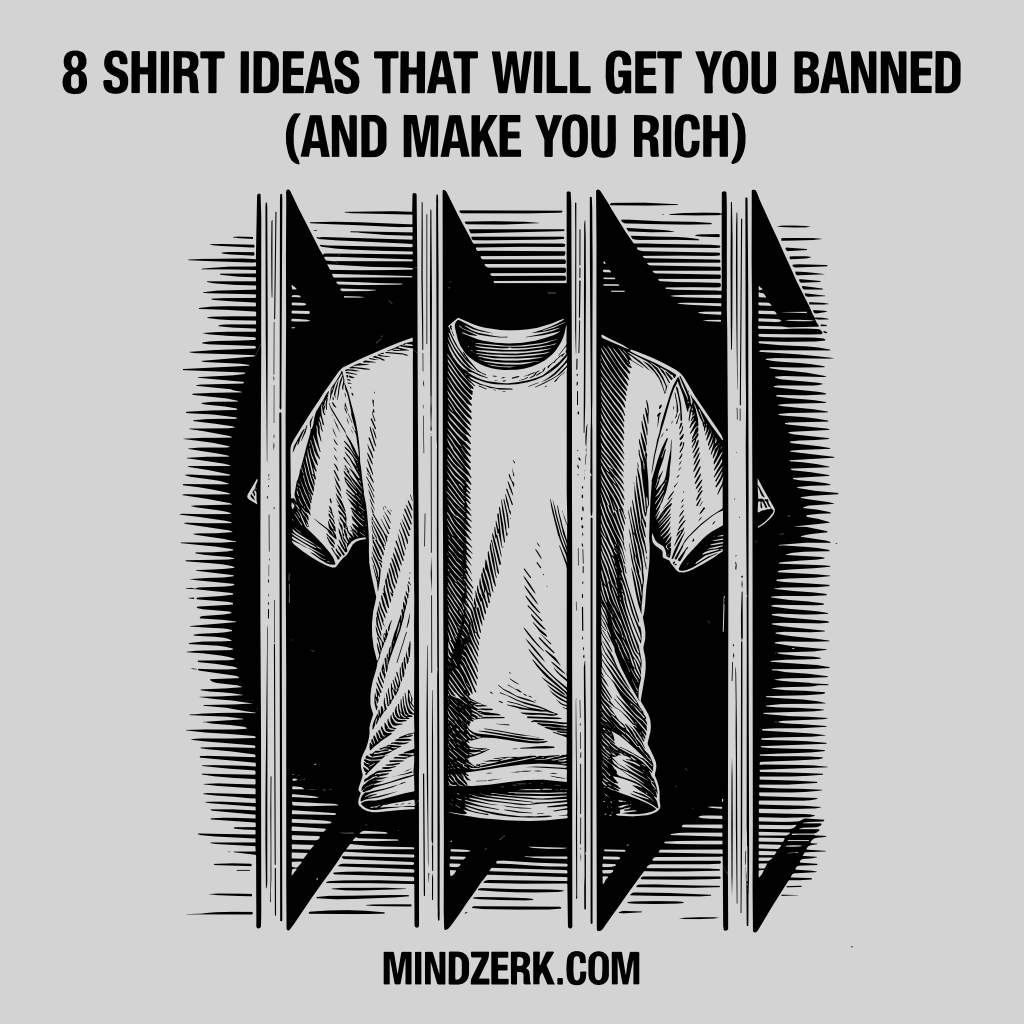
Below are eight shirt ideas that routinely trigger bans, warnings, rejected listings, angry emails — and strangely consistent sales.
This isn’t advice.
This is documentation.
1. Anti-Authority Statements That Don’t Name Names
Platforms hate implication more than insults.
You don’t say who you’re talking about.
You just let people recognize themselves.
Examples:
- “Respect Is Not Automatic”
- “Authority Is a Costume”
- “Obedience Isn’t a Personality”
- “Just Because You’re in Charge Doesn’t Mean You’re Right”
No slurs.
No politicians.
No logos.
Still flagged. Still reported. Still sells.
Why?
Because it pokes the invisible rule:
You may complain — but never question legitimacy.
These shirts don’t attack power.
They expose it.
That’s worse.
2. Shirts That Sound Like Confessions
Nothing scares platforms more than ambiguity.
Especially when it sounds like a crime… but isn’t.
Examples:
- “I Did It Once. I’d Do It Again.”
- “Ask Me About That One Night”
- “No Witnesses. No Regrets.”
- “Allegedly.”
The magic is that nothing illegal is stated — but the viewer fills in the blanks.
Moderators hate that.
Customers love it.
People don’t want slogans.
They want lore.
3. Mental Health… Without the Approved Language
Platforms love “awareness.”
They hate honesty.
Approved:
- “It’s okay not to be okay”
Not approved:
- “I Am Functioning Out of Spite”
- “This Is Me On My Best Day”
- “Therapy Didn’t Fix This”
- “Still Here. Don’t Know Why.”
These get reported because they don’t inspire.
They resonate.
The internet doesn’t want people who are coping.
It wants people who are improving.
These shirts refuse the narrative.
4. Shirts That Mock Hustle Culture
You can insult almost anything.
Just not productivity religion.
Examples:
- “Grinding Is Just Burnout With Better PR”
- “Side Hustle = Company Store 2.0”
- “I Refuse to Monetize My Soul”
- “Rest Is Not Laziness”
These don’t violate rules — but they violate belief systems.
Which is why they get throttled.
Because if people stop worshipping hustle, a lot of funnels collapse.
5. Shirts That Feel Like Classified Documents
People love shirts that look forbidden.
Not offensive.
Just… official.
Examples:
- Fake agency stamps
- “REDACTED” blocks
- File numbers
- “UNAUTHORIZED REPRODUCTION PROHIBITED”
Text like:
- “This Wasn’t Meant for You”
- “If You Found This, Pretend You Didn’t”
- “Archive Copy — Do Not Circulate”
Nothing illegal.
But psychologically?
Pure contraband energy.
People don’t buy shirts.
They buy artifacts.
6. Blunt Statements About Death (Without Violence)
You can’t glorify harm.
But you can acknowledge reality — and that alone freaks people out.
Examples:
- “We’re All On A Timer”
- “Nothing Lasts. Relax.”
- “Born Tired. Leaving Early.”
- “This Won’t Matter in 100 Years”
These make moderators uncomfortable because they don’t pretend.
Modern branding demands optimism.
These shirts shrug.
That shrug sells.
7. Shirts That Make the Wearer the Problem
The most dangerous move in humor is self-indictment.
Examples:
- “I’m Not The Role Model”
- “Bad Influence Department”
- “Do Not Take My Advice”
- “This Is A Poor Decision Outfit”
Nobody can accuse it of hate.
But it still gets flagged — because it doesn’t reinforce virtue.
Platforms prefer aspirational identities.
These shirts embrace human mess.
People trust that.
8. One-Sentence Chaos Statements
These are the killers.
Short.
Weird.
Contextless.
Examples:
- “It Didn’t Have To Be This Way”
- “Something Went Wrong In 2003”
- “We Missed A Step”
- “This Timeline Feels Rushed”
They say nothing.
They imply everything.
They spread because people project their own meaning onto them.
And when everyone sees something different, moderation breaks.
Which is why they get quietly buried.
Why These Shirts Actually Make Money
Because they do three things safe shirts never do:
- They signal tribe without spelling it out
- They create internal dialogue
- They feel slightly dangerous to wear
People don’t want merch anymore.
They want permission.
Permission to feel weird.
Permission to dissent quietly.
Permission to exist without polishing themselves.
That’s what these shirts sell.
Not cotton.
Not ink.
Recognition.