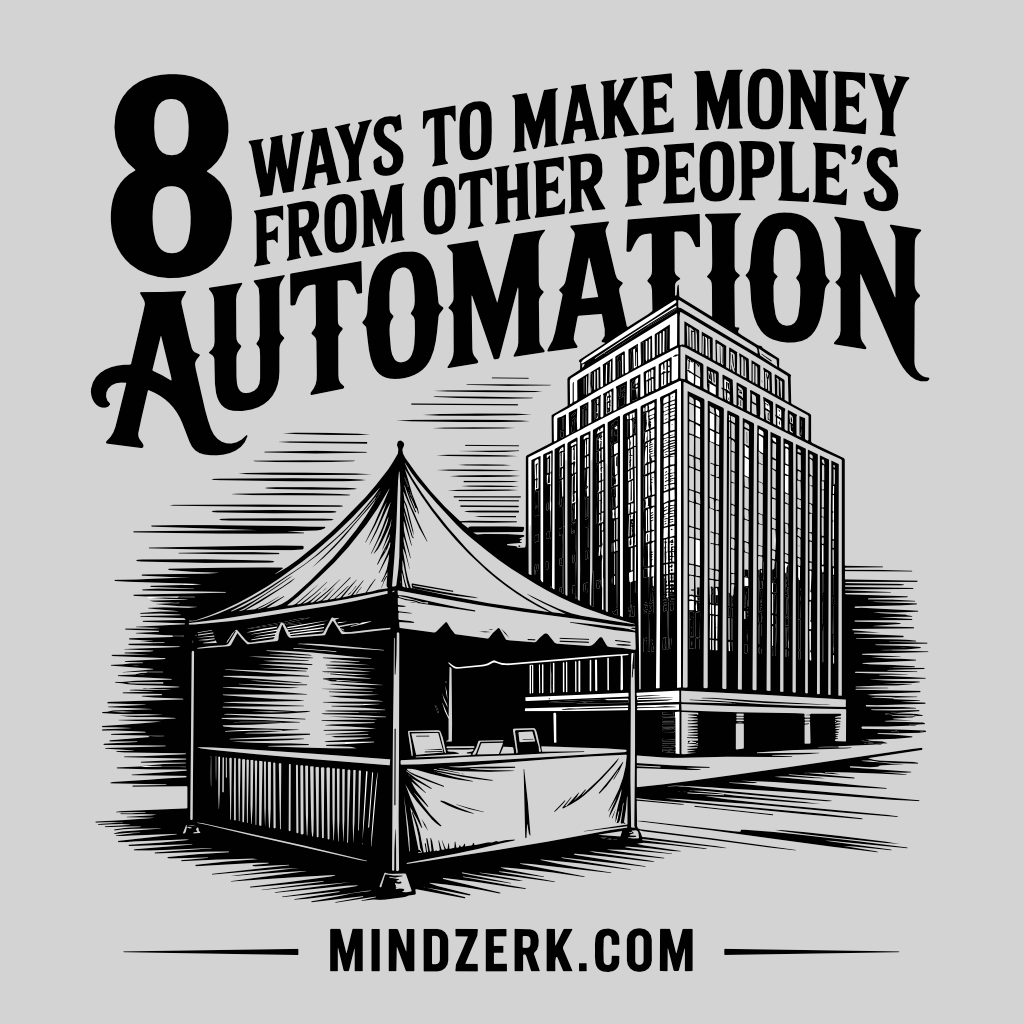

How to profit from the machines without building the machines.
Automation gets marketed like a gold rush. Everyone is told to build systems, workflows, funnels, bots, and AI stacks.
But here’s the part nobody says out loud:
You don’t have to build the automation to profit from it.
Entire economies form around tools created by other people. If you position yourself correctly, you can earn by riding the automation wave instead of engineering it.
Here are eight ways to do it.
1. Become the Translator Between Humans and Automation
Most automation fails because people don’t understand how to use it.
You step in as the interpreter.
What this looks like:
- Writing simple guides for complex tools
- Creating “human language” workflows
- Recording walkthrough videos
- Selling cheat sheets or starter packs
You are not selling technology.
You are selling clarity.
People pay to skip confusion.
2. Package Templates for Tools You Didn’t Build
Automation platforms thrive on templates.
Think:
- Email sequences
- Prompt libraries
- Zap workflows
- Notion dashboards
- Funnel frameworks
The original software creator builds the engine.
You sell the fuel.
Templates reduce thinking friction. That alone creates value.
3. Sell Setup Services for Existing Systems
Many users buy automation tools but never set them up.
That gap is money.
Examples:
- CRM configuration
- Email autoresponder setup
- AI chatbot configuration
- Workflow linking
You are not inventing anything.
You are assembling.
And assembly is often more valuable than invention.
4. Curate the Best Tools into Starter Kits
People are overwhelmed by options.
You win by narrowing choices.
Create:
- “Minimal automation stacks”
- Beginner bundles
- Niche-specific tool lists
- Done-for-you resource kits
The real product isn’t the tools.
It’s decision removal.
5. Become the Debugger or Fixer
Automation breaks constantly.
Triggers fail. APIs change. Updates kill workflows.
Most users panic.
If you learn troubleshooting basics, you become the fixer.
Revenue models:
- Hourly repair service
- Emergency fixes
- Workflow audits
- Maintenance retainers
Automation creates recurring chaos.
Fixers earn recurring money.
6. Build Content Around Other People’s Automation
Every automation tool needs content.
Ideas:
- Tutorials
- Case studies
- Trend reports
- Comparison guides
- Niche newsletters
You monetize through:
- affiliate links
- sponsorships
- paid reports
- memberships
You’re not the creator of the machine — you’re the media ecosystem around it.
7. License Pre-Built Systems as “Deployment Kits”
Some creators build automations but don’t package them well.
You can:
- license or white-label workflows
- rewrite documentation
- bundle them into deployable kits
This is classic info publishing logic.
The automation exists.
You transform it into something usable.
8. Sell Strategy Instead of Technology
The biggest misconception:
Automation is technical.
In reality, automation is behavioral design.
People need answers to:
- What should I automate first?
- What is actually worth automating?
- How do I avoid overcomplicating things?
You monetize by offering:
- strategy guides
- consulting sessions
- decision frameworks
- niche-specific playbooks
You don’t need to code.
You need perspective.
Automation Creates Shadows — That’s Where Opportunity Lives
Every new system produces invisible roles around it.
The builders get attention.
The surrounding ecosystem gets paid.
You can make money from automation without writing a single line of code, building a SaaS product, or inventing anything new.
Just step into the gaps:
- confusion
- setup
- maintenance
- education
- packaging
- curation
- translation
Automation scales machines.
But the real opportunity lies in serving the humans trying to use them.