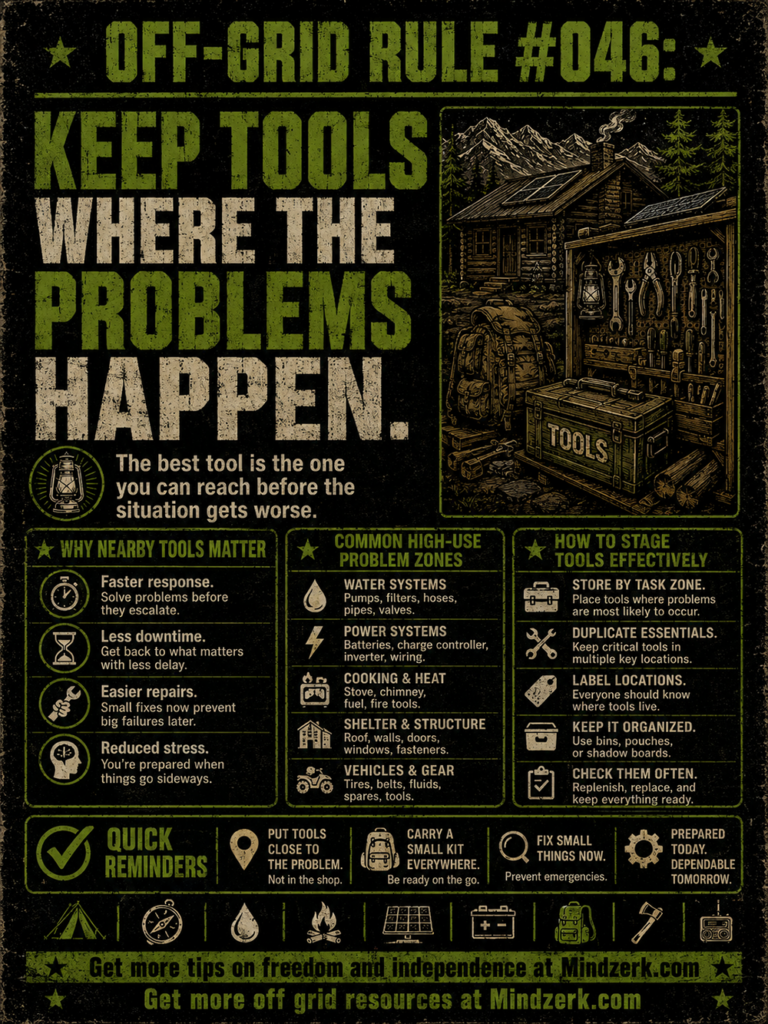

Most off-grid problems are small.
A loose fitting.
A leaking pipe.
A dead battery connection.
A loose hose clamp.
A stuck latch.
The problem itself usually isn’t what causes stress.
The real problem is spending twenty minutes searching for the tool you need while the situation gets worse.
That’s why Off-Grid Rule #032 is simple:
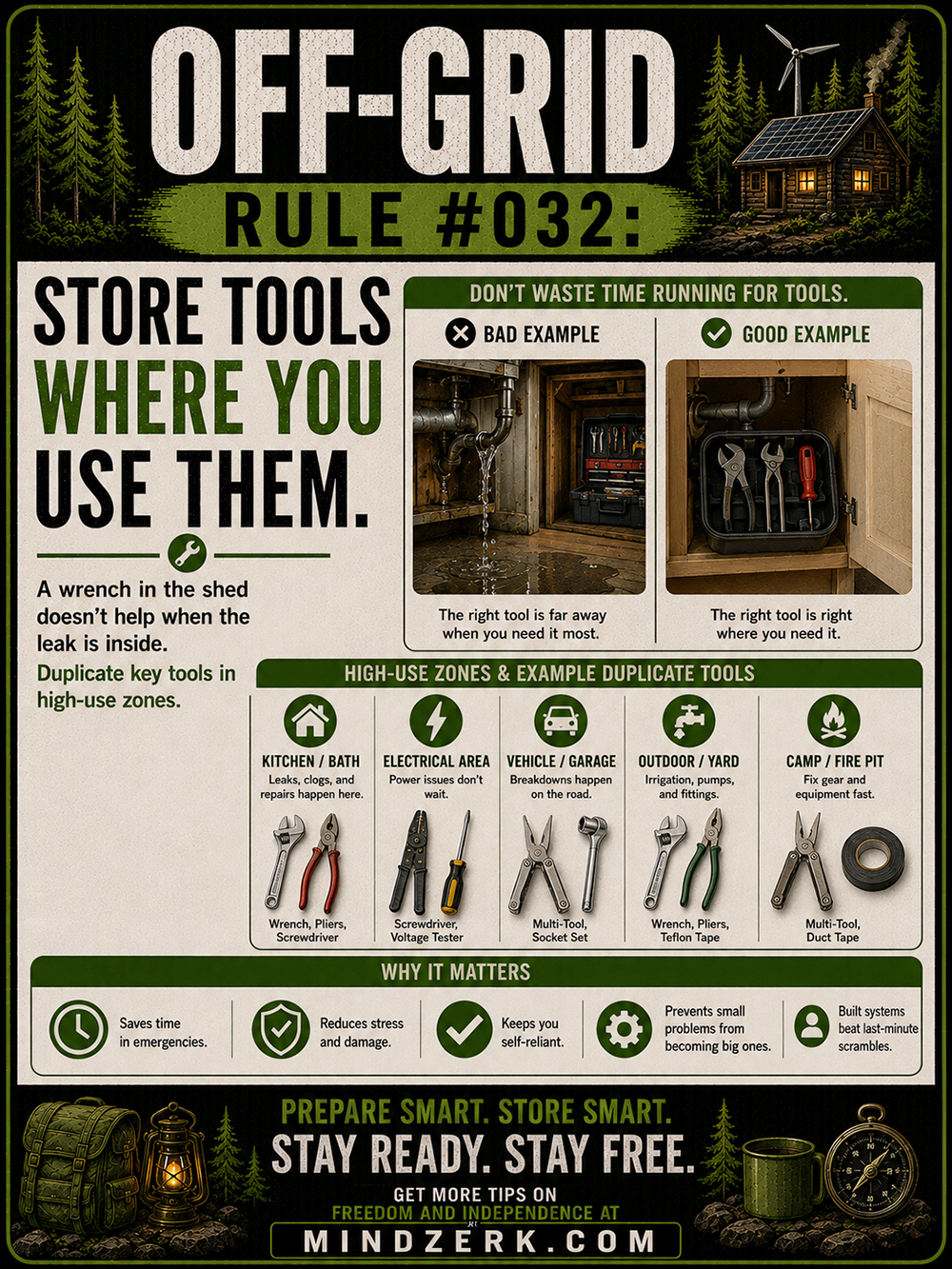
Store tools where you use them.
A wrench in the shed doesn’t help when the leak is under the kitchen sink.
The Myth of the Perfect Toolbox
Most people organize tools the same way.
Everything goes into:
- one toolbox
- one cabinet
- one workshop
- one shed
It looks neat.
It feels organized.
Until something breaks.
Then you find yourself running across the property looking for:
- a screwdriver
- pliers
- a wrench
- Teflon tape
- a socket
Meanwhile:
- water keeps leaking
- daylight keeps disappearing
- frustration keeps building
Centralized storage often creates decentralized problems.
Time Matters During Repairs
Off-grid living rewards fast action.
A small leak caught early might take:
- two minutes
- one wrench
- a quarter turn
Ignore it while searching for tools and it can become:
- water damage
- mold
- system failure
- wasted resources
The faster you respond, the smaller the problem usually stays.
Tool placement directly affects response time.
Build Tool Stations, Not Tool Collections
Instead of one giant toolbox, think in terms of stations.
Each high-use area should have the basic tools needed for common repairs.
The goal is simple:
The right tool should already be near the problem.
Kitchen and Bathroom Tool Station
Leaks happen here.
Frequently.
Useful tools include:
- adjustable wrench
- pliers
- screwdriver
- flashlight
- Teflon tape
A small container under the sink can solve most minor plumbing issues immediately.
Electrical Area Tool Station
Power issues rarely happen when it’s convenient.
Keep nearby:
- screwdriver set
- voltage tester
- wire stripper
- electrical tape
- spare fuses
The fewer trips you make, the faster troubleshooting becomes.
Vehicle and Garage Tool Station
Breakdowns happen where the vehicle is.
Not where your workshop is.
Keep:
- socket set
- multi-tool
- pliers
- tire gauge
- flashlight
Small repairs become easier when the tools are already present.
Outdoor Water System Tool Station
If you run:
- irrigation
- pumps
- water storage
- livestock systems
Keep tools nearby.
Useful items include:
- adjustable wrench
- pliers
- hose repair fittings
- Teflon tape
- spare clamps
Water problems rarely improve while you’re searching for equipment.
Campfire and Outdoor Living Area
Outdoor work creates constant small repairs.
Consider keeping:
- multi-tool
- duct tape
- knife
- lighter
- cordage
These items solve a surprising number of problems.
Duplicate Critical Tools
Many people resist duplication because it feels wasteful.
It usually isn’t.
You don’t need:
- five expensive drill sets
But having:
- three screwdrivers
- two adjustable wrenches
- extra pliers
Often saves far more time than it costs.
Critical tools should exist in multiple locations.
The cost is small.
The convenience is enormous.
Reduce Decision Fatigue
Every time you stop and ask:
“Where did I put that wrench?”
You lose time and mental energy.
Good systems eliminate decisions.
You shouldn’t have to think.
You should simply reach for the tool and begin the repair.
Off-grid living becomes easier when systems support action.
Small Problems Become Big Problems
This rule isn’t really about tools.
It’s about response time.
Small problems grow because people delay action.
Often that delay comes from inconvenience.
When tools are close:
- repairs happen sooner
- maintenance happens more often
- systems stay healthier
- emergencies become less common
Convenience can actually improve preparedness.
Build Systems That Work Under Stress
Anyone can find a tool when:
- conditions are perfect
- daylight is available
- nothing is urgent
The real test is:
- during storms
- after dark
- during equipment failures
- under pressure
That’s when tool placement matters most.
Good systems work when you’re tired.
Great systems work when you’re stressed.
The Bottom Line
Off-grid success often comes from small improvements.
Storing tools where you use them is one of those improvements.
It:
- saves time
- reduces frustration
- prevents damage
- improves maintenance
- increases self-reliance
Don’t build systems around where tools are stored.
Store tools around where problems happen.
Because the best tool in the world is useless if it’s on the other side of the property when you need it.