
Most people think AI’s biggest advantage is intelligence.
It’s not.
It’s consistency.
AI doesn’t get tired.
It doesn’t lose focus after lunch.
It doesn’t forget steps because it’s having a bad day.
But there’s a catch.
If you give AI random instructions, you’ll get random results.
The secret to getting consistently great output isn’t writing a brand-new prompt every time.
It’s building systems.
That’s why:
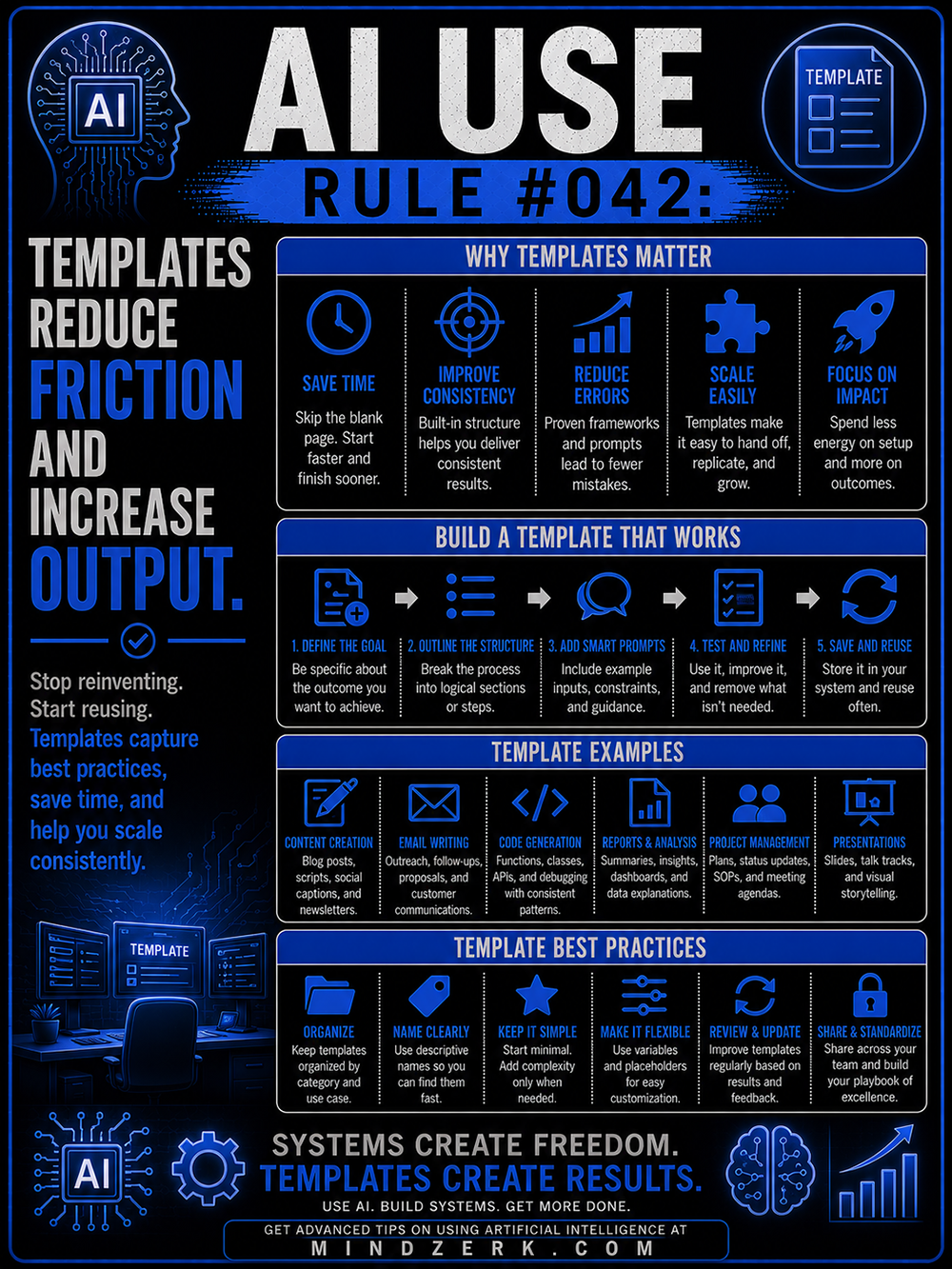
Stop reinventing.
Start reusing.
Templates capture what works and make success repeatable.
The less time you spend figuring out how to start, the more time you spend creating things that matter.
Why Templates Matter
Every task has friction.
Opening a blank page.
Starting a project.
Writing an email.
Planning a video.
Creating a report.
Most people waste energy deciding how to begin.
Templates remove that problem.
They let you skip the starting line.
Templates Save Time
Decision fatigue is real.
If you create the same types of content repeatedly, you shouldn’t make the same decisions repeatedly.
A good template lets you:
- Start instantly
- Skip setup
- Focus on content
- Finish faster
The more often you perform a task, the more valuable a template becomes.
Templates Improve Consistency
Professionals don’t rely on inspiration.
They rely on systems.
Templates make sure important pieces aren’t forgotten.
Your newsletters have the same structure.
Your social media posts maintain the same voice.
Your reports cover the same critical information.
Consistency builds trust.
Trust builds brands.
Templates Reduce Errors
Most mistakes happen during repetition.
People forget steps.
Miss sections.
Skip details.
Templates act like checklists.
They reduce human error while making AI more reliable.
A proven framework usually beats improvisation.
Templates Scale Easily
One good template can become ten.
Then one hundred.
Then one thousand.
Templates can be:
- Shared
- Delegated
- Automated
- Improved
- Combined
Instead of teaching someone your entire process, you hand them the template.
The system does the teaching.
Templates Let You Focus on Impact
The goal isn’t to automate creativity.
The goal is to automate the boring parts.
Let templates handle:
Formatting.
Structure.
Repeated instructions.
Common workflows.
That leaves your energy for strategy and ideas.
How to Build a Template That Works
Good templates aren’t complicated.
They simply organize success.
Step 1: Define the Goal
Ask yourself:
What outcome do I want?
Be specific.
A vague template creates vague results.
Bad:
“Write a blog post.”
Better:
“Write a 1,500-word conversational blog post with practical examples and actionable steps.”
Clarity matters.
Step 2: Outline the Structure
Break the task into pieces.
For example:
Introduction.
Problem.
Solution.
Examples.
Action steps.
Conclusion.
AI performs better when it knows the framework.
Step 3: Add Smart Prompts
Include:
Examples.
Constraints.
Desired tone.
Formatting rules.
Variables.
The more useful guidance you include, the better your template becomes.
Think of templates as reusable instructions for success.
Step 4: Test and Refine
Nothing works perfectly the first time.
Run the template.
Find weak spots.
Remove unnecessary steps.
Improve unclear sections.
Every use makes the template stronger.
Step 5: Save and Reuse
Don’t let good work disappear.
Store templates somewhere organized.
Build a personal library.
What takes an hour to build might save hundreds later.
Great Places to Use Templates
Almost every AI workflow can benefit.
Content Creation
Blog posts.
Newsletters.
Social media captions.
Video scripts.
Product descriptions.
Podcast outlines.
Email Writing
Sales emails.
Customer support.
Follow-ups.
Proposals.
Cold outreach.
Thank-you notes.
Code Generation
Function templates.
API integrations.
Documentation.
Debugging prompts.
Testing procedures.
Reports and Analysis
Weekly reports.
Data summaries.
Meeting notes.
Research breakdowns.
Dashboards.
Project Management
Task lists.
Meeting agendas.
Status updates.
Standard operating procedures.
Planning documents.
Presentations
Slide structures.
Workshop outlines.
Training materials.
Sales decks.
Educational content.
Template Best Practices
Templates should make life easier.
Not more complicated.
Organize Everything
Group templates by purpose.
Marketing.
Writing.
Programming.
Business.
Personal.
Find them quickly.
Use them often.
Name Them Clearly
Don’t save:
Prompt Final 7.
Use:
Weekly Newsletter Template.
Blog Article Framework.
Product Description Generator.
Clear names save time.
Keep Them Simple
Start with the minimum.
Add complexity only when necessary.
A simple template used daily beats a complicated one nobody touches.
Build in Flexibility
Leave room for customization.
Use placeholders.
Variables.
Optional sections.
Templates should guide, not trap.
Update Regularly
Your systems should evolve.
If you find a better approach, improve the template.
Treat them as living documents.
Share and Standardize
Teams work faster when everyone uses the same systems.
The best businesses don’t depend on individuals.
They depend on repeatable processes.
AI Loves Structure
AI performs best with clear instructions.
Templates provide exactly that.
Instead of writing:
“Help me with marketing.”
Try:
“Use this marketing template:
Audience:
Problem:
Solution:
Offer:
Call to Action:
Tone:
Length:
Platform:”
The difference in quality is often dramatic.
Structure helps AI think.
Build a Template Library
The best AI users aren’t creating better prompts every day.
They’re building assets.
Imagine having templates for:
Morning planning.
Weekly reviews.
Blog posts.
Newsletters.
Research.
Video scripts.
Business plans.
Customer support.
Sales pages.
Social posts.
Meeting summaries.
Every new template becomes another tool in your workshop.
Over time, the collection becomes more valuable than any single prompt.
Systems Create Freedom
Many people think productivity means working harder.
It doesn’t.
It means removing unnecessary effort.
Templates remove friction.
AI removes repetition.
Systems remove chaos.
Together, they create leverage.
Instead of solving the same problems every day, you solve them once and reuse the solution forever.
The Real AI Advantage
The future won’t belong to the people who write the most prompts.
It will belong to the people who build the best systems.
Templates are knowledge captured.
Experience organized.
Success documented.
Every great workflow eventually becomes a template.
Every great template eventually becomes a system.
Every great system creates freedom.
Systems Create Freedom. Templates Create Results.
The blank page is overrated.
Start with structure.
Improve through use.
Build a library of what works.
Let AI handle the repetition.
Let templates handle the setup.
Let your attention focus on the work that actually matters.
Because the people who get the most out of AI aren’t constantly starting over.
They’re building systems that make great work easier to repeat.
Stop reinventing.
Start reusing.
Build templates. Build systems. Get more done.