
Most people preparing for off-grid life worry about power first.
Solar panels.
Generators.
Battery banks.
Fuel storage.
Those things matter.
But there’s something even more important.
Water.
You can live without electricity.
You can adapt without internet.
You can survive without many modern conveniences.
You cannot survive long without water.
That’s why:
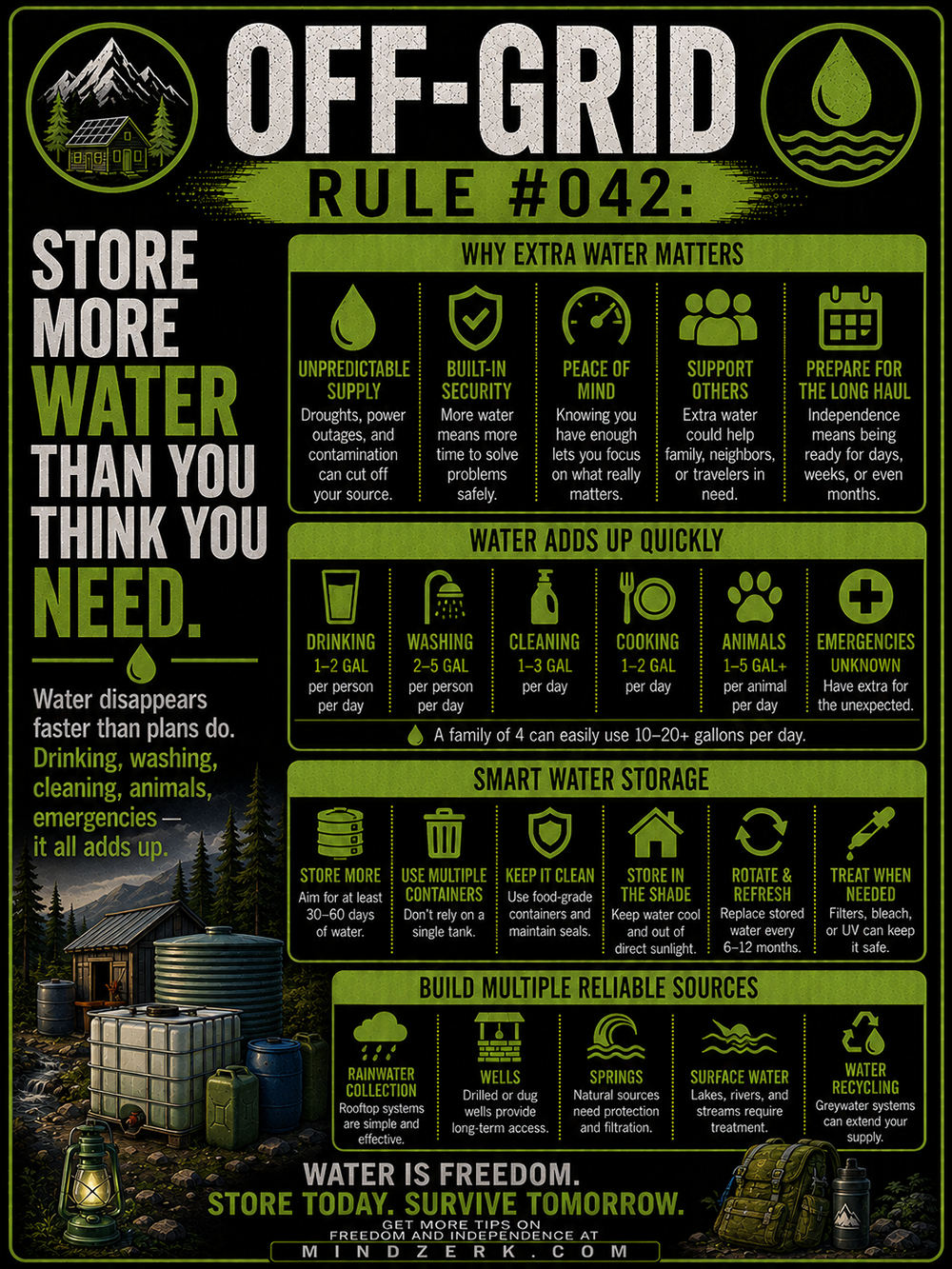
Water disappears faster than plans do.
Drinking.
Washing.
Cooking.
Cleaning.
Animals.
Gardens.
Unexpected emergencies.
It all adds up.
The people who run out of water rarely planned to.
They simply underestimated how much they would actually use.
Why Extra Water Matters
Water storage isn’t about paranoia.
It’s about buying yourself time.
Every gallon stored is one less emergency.
One less rushed trip to town.
One less crisis during a drought or power outage.
Extra water creates options.
Options create freedom.
Nature Doesn’t Care About Your Schedule
Water supplies can disappear unexpectedly.
Drought.
Power failures.
Broken pumps.
Frozen pipes.
Contaminated wells.
Equipment failures.
Storm damage.
Wildfires.
The question isn’t whether something can interrupt your water supply.
It’s whether you’ll be ready when it does.
Water Creates Security
Having extra water means problems become inconveniences.
A pump breaks?
You have time.
A well needs repairs?
No panic.
Power goes out?
You keep functioning.
Stored water buys breathing room.
And breathing room leads to better decisions.
Peace of Mind Matters
Preparedness isn’t just physical.
It’s mental.
Knowing you have enough water reduces stress.
You can focus on solving the problem instead of surviving the crisis.
Preparedness creates confidence.
Confidence creates resilience.
Extra Water Helps Other People
Preparedness isn’t selfish.
A neighbor with a broken well.
Family visiting unexpectedly.
Travelers stranded during bad weather.
An injured animal.
Emergencies rarely happen exactly as planned.
Having extra means you can help instead of simply hoping.
Plan for the Long Haul
Many people prepare for a few days.
Off-grid thinking prepares for weeks.
Sometimes months.
Independence means thinking beyond short-term emergencies.
Water is one of the easiest ways to increase your resilience.
Water Adds Up Fast
Most people underestimate daily usage.
A glass of water seems small.
A shower seems small.
Washing dishes seems small.
Together, they become significant.
Drinking
The bare minimum for survival isn’t enough for comfortable living.
Plan for roughly:
1–2 gallons per person per day.
Hot weather.
Hard work.
Illness.
Those numbers climb quickly.
Washing
Basic hygiene matters.
Hand washing.
Bathing.
Laundry.
Expect several gallons per person each day.
Clean people stay healthier.
Healthy people use fewer resources later.
Cleaning
Dishes.
Counters.
Equipment.
Containers.
Floors.
Cleaning protects health and extends the life of your gear.
Cooking
Boiling.
Food preparation.
Coffee.
Tea.
Baking.
Rehydrating food.
Cooking consumes more water than many people realize.
Animals
Pets and livestock have their own needs.
Dogs.
Cats.
Chickens.
Goats.
Horses.
Every animal increases your daily water requirements.
Plan accordingly.
Emergencies
Someone gets sick.
A guest arrives.
Equipment fails.
Weather changes.
Always have a buffer.
The unexpected should already be part of your plan.
Smart Water Storage
More water isn’t enough.
Store it intelligently.
Store More Than You Think
A common mistake is planning for the minimum.
Aim for comfort, not survival.
A practical goal for many off-grid homes is several weeks of stored water.
If you have the space, build beyond that.
You’ll rarely regret having extra.
Use Multiple Containers
Never trust a single tank.
One leak.
One contamination event.
One cracked fitting.
One accident.
And everything is gone.
Spread storage across multiple containers.
Redundancy creates reliability.
Keep Water Clean
Use food-grade containers.
Maintain seals.
Protect tanks from contamination.
Inspect regularly.
Clean storage systems before they become problems.
Water storage is only useful if the water stays usable.
Store Water in the Shade
Sunlight encourages algae growth.
Heat reduces water quality over time.
Cool, shaded storage helps preserve water and extends container life.
Simple placement matters.
Rotate and Refresh
Stored water isn’t something you forget about.
Use it.
Replace it.
Inspect containers.
Refresh supplies periodically.
Maintenance keeps preparedness practical.
Treat Water When Needed
Stored water may eventually need treatment.
Filters.
Boiling.
UV purification.
Chemical treatment.
Multiple purification methods provide extra security.
Never rely on a single solution.
Build Multiple Water Sources
Storage is important.
Multiple sources are even better.
Rainwater Collection
Rain is free.
Roof systems can collect significant amounts of water.
Even small setups add resilience.
Wells
A reliable well provides long-term independence.
Maintain pumps.
Protect the water source.
Have backup power if possible.
Springs
Natural springs can provide excellent water.
Protect them from contamination.
Filter and monitor quality.
Nature provides.
You still need stewardship.
Surface Water
Lakes.
Streams.
Ponds.
Rivers.
They expand your options but almost always require treatment.
Never assume surface water is safe.
Water Recycling
Gray water systems can stretch supplies.
Water used for washing can often serve irrigation or landscaping purposes.
Reuse where practical and safe.
Efficiency matters.
Water Is More Valuable Than Convenience
Many people buy another gadget.
Another tool.
Another accessory.
Few regret investing in water storage.
A bigger tank.
Another barrel.
Extra filters.
Spare hoses.
Backup pumps.
These purchases rarely seem exciting.
Until they’re essential.
Think Like an Off-Grid Engineer
Every off-grid system should ask:
What happens if this fails?
Water planning means having answers.
If the pump fails…
If the power goes out…
If the well runs dry…
If contamination occurs…
If drought lasts longer than expected…
Preparedness means removing single points of failure.
Water Is Freedom
People often think freedom comes from land.
Or money.
Or solar panels.
Off-grid life teaches a different lesson.
Freedom comes from meeting your basic needs without depending on perfect circumstances.
Water is one of those needs.
Store enough.
Protect it.
Maintain it.
Expand your supply whenever possible.
Because the future is unpredictable.
Equipment breaks.
Weather changes.
Life happens.
The people who stay comfortable aren’t always the strongest or luckiest.
They’re the ones who prepared before they had to.
Water Is Freedom. Store Today. Survive Tomorrow.
You can live without many comforts.
You cannot live without water.
Don’t plan for the average day.
Plan for the difficult one.
Store more than you think you’ll need.
Build multiple sources.
Protect what you have.
Refresh your supplies.
Keep improving your system.
Because off-grid independence isn’t about surviving by the skin of your teeth.
It’s about creating enough margin that problems stay small.
A full water tank is more than storage.
It’s security.
It’s peace of mind.
It’s resilience.
It’s freedom.
Store more.
Store smart.
Store before you need it.
Because water disappears faster than plans do. And on the homestead, water is freedom.