
Most people treat privacy like a switch.
They think it’s either on or off.
Safe or exposed.
Private or public.
That’s not how it works.
Privacy is a spectrum—and most people are standing way further out in the open than they think.
If you assume you’re alone… you’ve already lost control.
The Reality You Don’t See
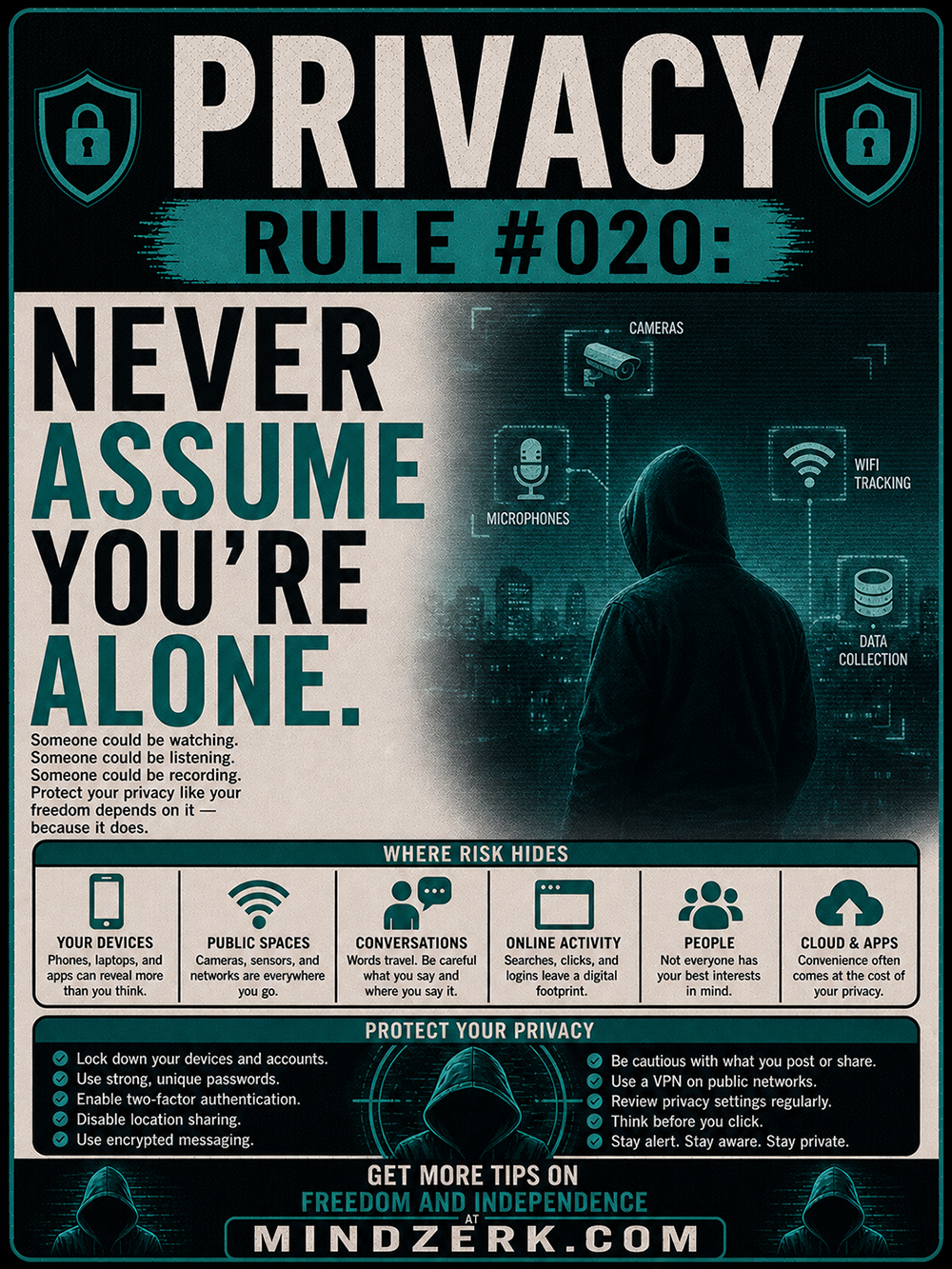
You’re surrounded by systems that watch, log, store, and analyze.
Not always malicious.
Not always obvious.
But always present.
- Cameras record movement
- Microphones capture sound
- Networks log activity
- Apps collect behavior
- Platforms store everything
And most of it happens quietly.
No alerts.
No warnings.
No obvious signals.
Where Risk Actually Hides
It’s not just “hackers” or extreme scenarios.
It’s the normal stuff.
Your Devices
Your phone, laptop, apps—they know more than you think.
Location. Usage patterns. Contacts. Habits.
Public Spaces
Cameras, sensors, and networks are everywhere.
Stores. Streets. Parking lots. Airports.
You’re part of a system whether you think about it or not.
Conversations
Words travel.
What you say, where you say it, who hears it—it all matters.
Online Activity
Searches. Clicks. Logins.
Each one leaves a trail.
People
Not everyone has your best interests in mind.
Oversharing spreads faster than you expect.
Cloud & Apps
Convenience trades for exposure.
Every connected service is another doorway.
The Mindset Shift
This isn’t about paranoia.
It’s about awareness.
Act like your actions leave a trace—because they do.
When you move with that assumption:
- You share less
- You secure more
- You think before acting
And that alone cuts your exposure dramatically.
Awareness Is Protection
You don’t need to disappear.
You need to stop being careless.
Small habits create big protection:
- You pause before posting
- You question what an app really needs
- You limit what others can see
- You control what gets stored
Most privacy loss isn’t forced.
It’s given away.
Lock Down What Matters
You don’t need a complex system. You need consistency.
Secure Your Accounts
- Strong, unique passwords
- Two-factor authentication
- Regular checks on account activity
Control Your Devices
- Lock them
- Update them
- Turn off what you don’t use
Especially:
- Location tracking
- Background permissions
- Unnecessary access
Protect Your Communication
- Use encrypted messaging when it matters
- Be mindful of where and how you talk
- Don’t assume “private” means private
Be Smart on Public Networks
- Avoid sensitive activity on open Wi-Fi
- Use a VPN when needed
- Assume public networks are exposed
Clean Up Your Digital Footprint
- Review privacy settings regularly
- Remove unused apps
- Limit what you store in the cloud
The Biggest Leak: You
The system doesn’t need to break in if you hand it over.
Oversharing is the easiest way to lose privacy.
- Posting your location in real time
- Sharing routines and habits
- Broadcasting personal details
- Trusting every platform by default
You don’t need to be hacked if you’re already exposed.
Stay Alert Without Going Crazy
This isn’t about living in fear.
It’s about living with intention.
- Think before you click
- Think before you share
- Think before you trust
That’s it.
The Real Advantage
Most people operate on autopilot.
They assume safety.
They assume privacy.
They assume no one is paying attention.
You don’t.
That alone puts you ahead.
The Bottom Line
You don’t need to see the risk for it to exist.
- Cameras don’t announce themselves
- Data collection doesn’t interrupt you
- Tracking doesn’t ask permission clearly
It just happens.
So don’t assume you’re alone.
Assume your actions matter.
Because they do.
Stay aware.
Stay intentional.
Stay private.