
Most people prepare for dramatic failures.
Storms.
Blackouts.
Break-ins.
Mechanical breakdowns.
But cold is different.
Cold destroys systems quietly.
No explosion.
No warning siren.
No dramatic collapse.
Just a slow freeze that cracks, drains, weakens, and ruins things from the inside out.
That’s why one hard lesson in off-grid living is this:
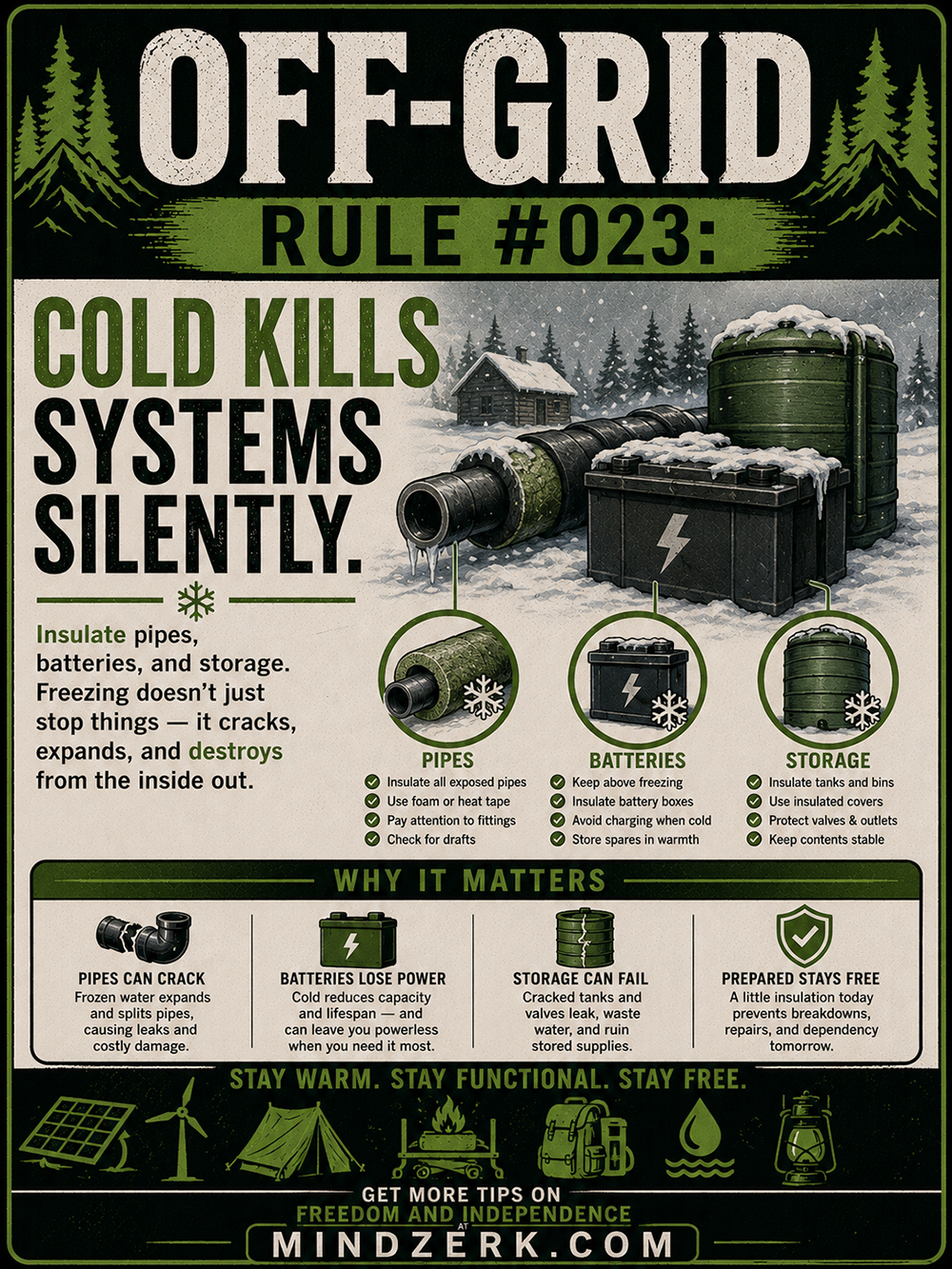
Cold kills systems silently.
And if you ignore winter preparation, your gear eventually teaches you the lesson the expensive way.
Freezing Doesn’t Just Stop Things
People often think cold simply “shuts things down.”
But freezing conditions actively damage infrastructure.
Water expands when it freezes.
That expansion:
- Splits pipes
- Cracks fittings
- Destroys valves
- Ruins pumps
- Warps tanks
- Weakens seals
The danger is not just temporary inconvenience.
The danger is permanent damage.
Pipes Are Usually the First Casualty
A tiny exposed section of pipe can destroy an entire system.
Especially:
- Outdoor lines
- Crawlspace plumbing
- Uninsulated fittings
- RV hookups
- Gravity-fed water systems
- Storage tanks
One frozen section can:
- Stop flow
- Crack internally
- Leak once thawed
- Drain your stored water
- Cause hidden moisture damage
And often you won’t notice until everything warms up.
By then the damage is already done.
Insulation Is Cheap. Repairs Aren’t.
A lot of off-grid resilience comes down to prevention.
Simple protection matters:
- Foam insulation
- Heat tape
- Pipe wraps
- Insulated covers
- Wind barriers
- Proper routing
Cold exposure compounds over time.
The more vulnerable your system, the more winter punishes neglect.
Batteries Hate Cold
Cold destroys battery performance.
This catches many people off guard.
Battery banks that worked fine in warm weather suddenly:
- Lose capacity
- Charge slower
- Discharge faster
- Deliver weaker output
- Fail under load
Lithium batteries especially struggle in freezing conditions if improperly managed.
And if your off-grid system depends on:
- Solar
- Backup batteries
- Power stations
- Vehicle systems
- Communication gear
…winter becomes a serious stress test.
Store Batteries Correctly
Basic cold-weather battery practices matter:
- Keep batteries above freezing when possible
- Use insulated battery boxes
- Avoid charging lithium batteries when frozen
- Store backup batteries indoors if practical
- Monitor voltage more often in winter
Power problems often start long before total failure appears.
Cold Damages Stored Supplies Too
Cold affects more than plumbing and power.
Storage systems can fail silently through:
- Cracked containers
- Frozen liquids
- Condensation buildup
- Seal failure
- Moisture intrusion
- Temperature swings
This matters for:
- Water reserves
- Food storage
- Fuel systems
- Medical supplies
- Tools
- Electronics
Winter preparation is not just about survival.
It’s about preservation.
Moisture Makes Everything Worse
Cold and moisture together become destructive fast.
Condensation leads to:
- Rust
- Mold
- Corrosion
- Rot
- Electrical problems
And many off-grid setups naturally create condensation:
- Metal sheds
- Containers
- Cabins
- Water systems
- Battery enclosures
Ventilation matters just as much as insulation.
Why Cold Is So Dangerous
Cold problems are deceptive because they develop slowly.
You may not notice:
- Small cracks
- Weakening seals
- Reduced battery capacity
- Moisture buildup
- Tiny leaks
Until:
- Water stops flowing
- Systems fail
- Storage gets ruined
- Power disappears
Winter punishes delayed maintenance.
Stay Ahead of the Freeze
Good off-grid systems are proactive.
Not reactive.
That means seasonal preparation before temperatures crash.
Winter Preparation Checklist
Protect Pipes
- Insulate exposed lines
- Seal drafts
- Add heat tape where needed
- Drain vulnerable systems if unused
- Inspect fittings regularly
Protect Batteries
- Keep them insulated
- Monitor charge health
- Store backups in warmer locations
- Avoid freezing charge cycles
Protect Storage
- Use insulated containers
- Elevate supplies off cold ground
- Protect valves and fittings
- Watch for moisture buildup
Protect Fuel Systems
- Rotate fuel
- Prevent water contamination
- Protect generators from exposure
- Test cold-weather startup capability
Simplicity Wins in Winter
Complex systems tend to fail harder in extreme conditions.
Simple systems:
- Break less
- Diagnose easier
- Repair faster
- Recover quicker
That’s why many experienced off-grid people eventually lean toward:
- Gravity-fed systems
- Manual backups
- Passive heating
- Redundant setups
- Minimal moving parts
Winter rewards simplicity.
Preparedness Is Quiet
Most resilience work looks boring.
Insulating pipes.
Checking fittings.
Protecting batteries.
Sealing gaps.
Monitoring systems.
But those small actions prevent major failures later.
Preparedness is rarely dramatic.
The benefit appears when everyone else is struggling.
Nature Does Not Care About Convenience
Cold does not negotiate.
It doesn’t care:
- How expensive your setup was
- How new your gear is
- How confident you felt
Physics always wins.
Water expands.
Batteries weaken.
Metal contracts.
Plastic cracks.
The goal is not to fight nature.
The goal is to work with it intelligently.
Final Thought
A strong off-grid system is not just functional in perfect weather.
It survives stress.
Winter reveals weaknesses fast.
And the systems that last are usually the ones built with:
- Redundancy
- Insulation
- Simplicity
- Maintenance
- Realistic expectations
Because survival often comes down to protecting the small things before they become big failures.
So before the temperature drops:
- Check your pipes
- Protect your batteries
- Inspect your storage
- Fix vulnerabilities early
And remember:
Stay warm.
Stay functional.
Stay free.