
Most people imagine privacy failures coming from obvious threats.
A mysterious hacker.
A stranger online.
A suspicious email.
A criminal organization.
But many real vulnerabilities come from something far more dangerous:
Familiarity.
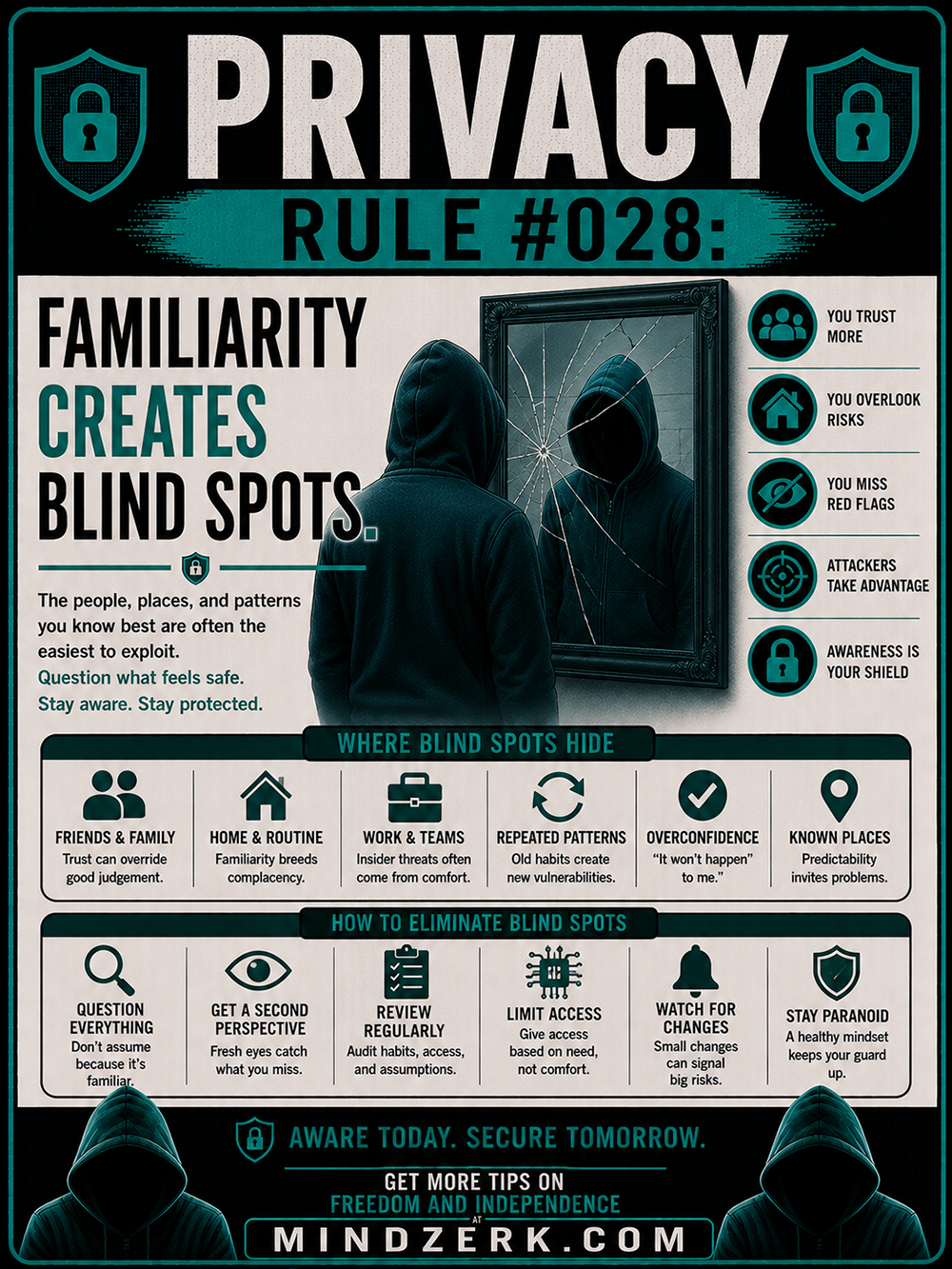
The people, systems, routines, and places you trust the most are often where your guard drops.
That’s how blind spots form.
And blind spots are exactly what attackers, manipulators, scammers, and bad actors look for.
Familiarity Lowers Awareness
Human beings naturally relax around what feels normal.
That includes:
- Friends
- Family
- Coworkers
- Familiar apps
- Daily routines
- Trusted platforms
- Repeated habits
- Known environments
The more familiar something becomes:
The less critically we examine it.
That creates vulnerability.
You stop questioning things.
You stop noticing small warning signs.
You stop verifying.
Trust Can Override Judgment
Trust is useful.
Blind trust is dangerous.
People often ignore obvious risks because:
- “I know them.”
- “They would never do that.”
- “This has always been safe.”
- “I’ve done this a thousand times.”
- “Nothing bad has happened before.”
That mindset creates exploitable openings.
Many security failures happen because:
- Someone trusted the wrong person
- Someone reused old habits
- Someone ignored unusual behavior
- Someone assumed familiarity meant safety
Attackers understand this.
They weaponize comfort.
The Most Dangerous Threats Often Look Normal
Real-world manipulation rarely arrives looking dramatic.
It often appears as:
- Routine conversations
- Familiar emails
- Trusted coworkers
- Normal requests
- Everyday links
- Shared accounts
- Casual oversharing
- Comfortable routines
That’s why social engineering works so well.
People lower defenses around familiarity.
Blind Spots Hide in Routine
Routines are efficient.
But routines also become invisible.
You stop actively noticing:
- What you click
- What you share
- Who has access
- What permissions exist
- What devices stay connected
- What habits expose patterns
Repetition creates autopilot behavior.
Autopilot behavior creates exploitable gaps.
Friends and Family Can Become Weak Points
This is uncomfortable, but important.
Not every privacy breach comes from malicious intent.
Sometimes:
- Someone talks too much
- Someone shares photos carelessly
- Someone exposes locations
- Someone reuses passwords
- Someone accidentally leaks information
People close to you often know:
- Your routines
- Your weaknesses
- Your systems
- Your location
- Your habits
That information becomes dangerous when mishandled.
Even unintentionally.
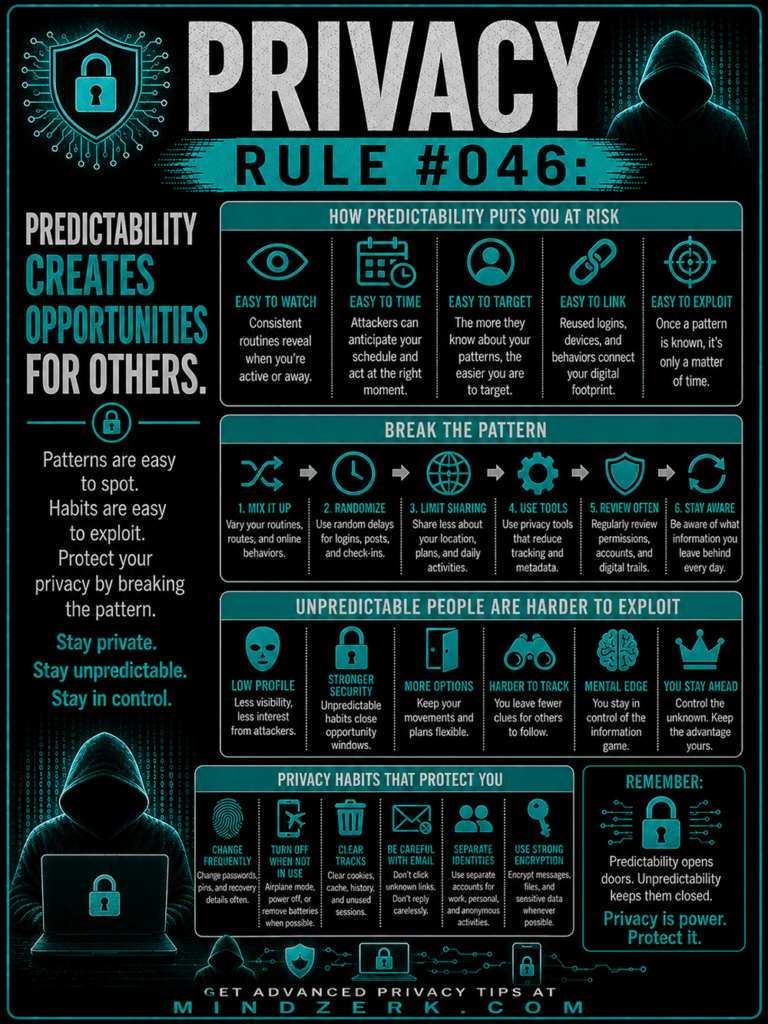
Home and Routine Create Predictability
Predictability makes targeting easier.
If people know:
- Where you are
- When you leave
- What devices you use
- Where you store things
- When you travel
- How your systems operate
…your privacy weakens.
Patterns reveal structure.
Structure reveals vulnerability.
Workplaces Are Full of Blind Spots
Many people assume internal systems are automatically safe.
But insider threats are real.
Work environments often create:
- Excessive trust
- Shared access
- Weak verification
- Casual oversharing
- Permission creep
- Poor accountability
Sometimes the greatest vulnerabilities come from people already inside the system.
Not outsiders.
Overconfidence Is Dangerous
One of the biggest blind spots is believing:
“It won’t happen to me.”
That mindset causes people to:
- Ignore warnings
- Delay updates
- Reuse passwords
- Skip audits
- Overshare publicly
- Trust too easily
- Avoid verification
Confidence without awareness becomes complacency.
And complacency creates openings.
Known Places Feel Safer Than They Are
Familiar environments reduce alertness.
That includes:
- Your home network
- Favorite coffee shops
- Trusted websites
- Familiar apps
- Local communities
- Regular travel routes
People stop scanning for risk because the environment feels normal.
But attackers specifically target predictable behavior.
Question What Feels Safe
Privacy-minded people learn to question familiarity.
Not obsessively.
Not fearfully.
But consciously.
Ask:
- Why do I trust this?
- Is this still secure?
- Who actually has access?
- What assumptions am I making?
- What could go wrong?
- What am I overlooking because it feels normal?
Awareness matters more than paranoia.
How To Eliminate Blind Spots
Question Everything
Do not assume something is safe because it feels familiar.
Review it critically.
Get A Second Perspective
Fresh eyes catch what routine misses.
Have trusted people review:
- Security practices
- Access permissions
- System setups
- Operational habits
Review Regularly
Audit:
- Passwords
- Accounts
- Sharing permissions
- Devices
- Routines
- Data exposure
Blind spots grow over time.
Limit Access
Access should be based on necessity.
Not comfort.
Watch For Changes
Small behavioral changes often signal larger problems.
Pay attention to:
- Unusual requests
- New patterns
- Unexpected access
- Behavioral shifts
- Odd communication
Maintain Healthy Skepticism
Healthy skepticism is protective.
Blind trust is not.
Familiarity Is Not Security
Just because something is:
- Common
- Routine
- Popular
- Trusted
- Familiar
…does not mean it is safe.
Comfort can hide danger.
That’s why awareness matters.
Awareness Is Your Shield
Privacy is not just:
- Encryption
- VPNs
- Passwords
- Tools
- Software
It’s awareness.
The ability to:
- Notice patterns
- Detect inconsistencies
- Question assumptions
- Stay mentally engaged
Most security failures happen long before the technical breach.
They begin with relaxed awareness.
Stay Aware Without Becoming Paranoid
The goal is not fear.
The goal is awareness.
You do not need to distrust everyone.
You need to:
- Stay observant
- Avoid complacency
- Reevaluate assumptions
- Keep boundaries healthy
- Protect sensitive information
Calm awareness is stronger than blind comfort.
Final Thought
Familiarity creates blind spots because comfort lowers vigilance.
The people, places, and systems you trust most are often the ones you stop questioning.
That’s where vulnerabilities grow quietly.
Privacy requires awareness.
Not just tools.
Question what feels safe.
Review what feels routine.
Because:
The things you stop noticing are often the things that expose you first.