
Most people build power systems like they’re stacking comfort.
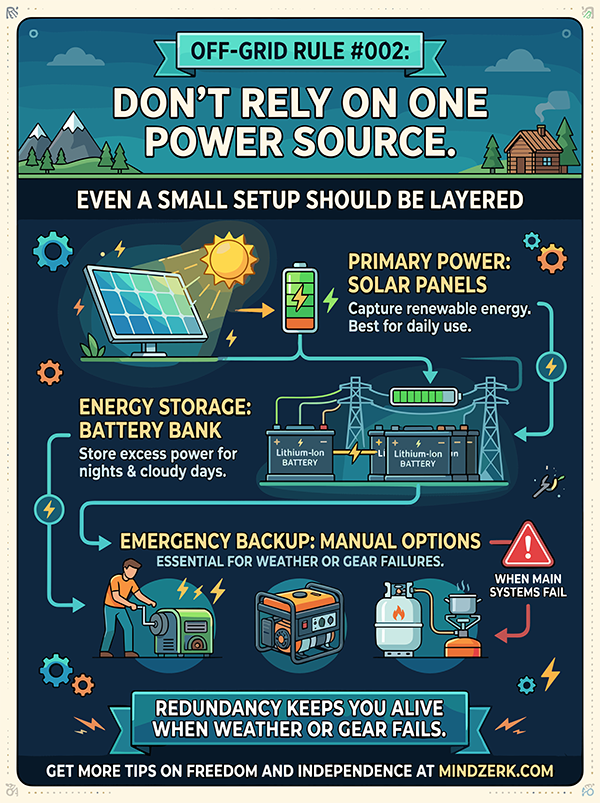
Panels. Batteries. Inverters. Backup chargers.
It looks solid. Feels solid.
Until one piece fails—and the whole chain goes down with it.
The Problem With “Modern” Setups
Here’s the truth most people don’t want to admit:
The more parts your system has, the more ways it can break.
- Batteries degrade
- Inverters fail
- Charge controllers glitch
- Connections loosen
And when one link goes, everything behind it is useless.
That’s not independence. That’s dependency with extra steps.
The Rule: Always Have One Power Source That Works Alone
Keep one way to generate or use power that doesn’t rely on your main system.
No chains.
No layers.
No fragile dependencies.
Something you can turn on—or use—without thinking.
What Counts as a “Standalone” Power Source?
This isn’t about going primitive. It’s about going reliable.
Examples:
- A small standalone generator (no integration needed)
- A direct-to-device solar setup (panel → device, no battery bank required)
- Hand-crank or manual devices for essentials
- A dedicated power bank that’s always charged and isolated
The key is simple:
It works even if everything else is dead.
Why This Matters More Than You Think
When your main system fails, you don’t just lose power.
You lose:
- Light
- Communication
- Heat (in some cases)
- The ability to troubleshoot the problem
That’s when stress kicks in. Bad decisions follow.
A single independent power source cuts through all of that.
Flip it on. You’re back in control.
The Hidden Advantage: Instant Recovery
A backup system isn’t just about survival.
It’s about speed.
Instead of scrambling to fix a complex setup in the dark, you:
- Switch to your standalone source
- Stabilize your situation
- Fix the main system calmly
That’s the difference between reacting and operating.
Where People Screw This Up
They build “backups” that depend on the same system.
- A second battery tied to the same controller
- A backup inverter wired into the same setup
- More solar… feeding the same failure point
That’s not redundancy.
That’s duplication of weakness.
The Bottom Line
You don’t need a bigger system.
You need a separate one.
One power source that ignores failure.
No matter what happens to your main setup, this one keeps going.
Apply This Everywhere
This isn’t just about electricity.
It’s a rule for everything you build:
- Water
- Communication
- Income
- Tools
Always have one version that still works when the rest collapses.
That’s how you stop depending on systems—and start controlling your environment.