
Most failures don’t happen all at once.
They creep in.
Voltage drops slowly.
Water levels drift down.
Pressure weakens just enough to ignore.
Everything still works… until it doesn’t.
And by the time you notice, it’s already a problem.
The Problem With Silent Failure
Modern systems hide their issues.
Apps look fine.
Screens show “normal.”
Everything feels operational.
Meanwhile:
- Batteries are dying
- Lines are clogging
- Systems are degrading
You don’t see it coming because nothing tells you.
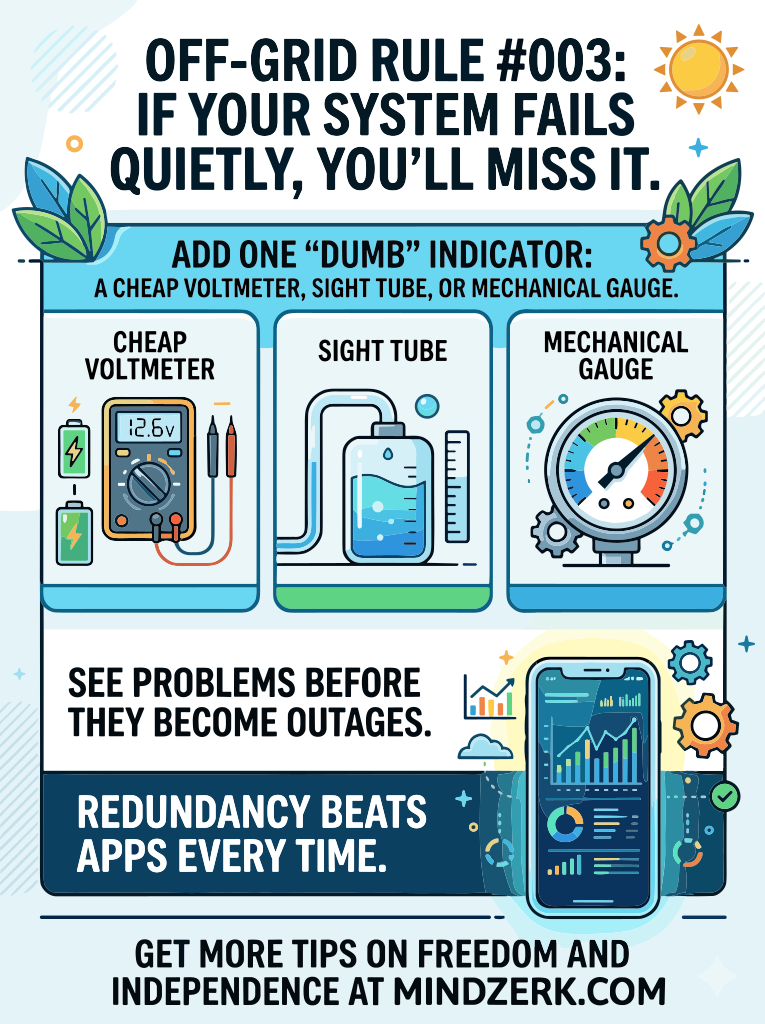
The Rule: Add One “Dumb” Indicator
Every system needs at least one simple, always-visible indicator.
Not digital.
Not dependent on software.
Something physical. Obvious. Immediate.
What Counts as a “Dumb” Indicator
You’re not looking for complexity.
You’re looking for clarity.
1. Cheap Voltmeter
- Shows battery health instantly
- No app. No guesswork
- If it drops—you know
2. Sight Tube (Water Systems)
- You can literally see the level
- No sensors needed
- No surprises
3. Mechanical Gauge
- Pressure, flow, or system status
- Always visible
- No power required
Why This Works
Because it removes interpretation.
You don’t need:
- Notifications
- Apps
- Data dashboards
You just look.
And you know.
The Hidden Advantage: Early Detection
A simple indicator gives you time.
You catch:
- Slow leaks
- Power drops
- System strain
Before they turn into full failures.
That’s the difference between:
- A quick fix
- A full outage
Where People Go Wrong
They trust digital feedback too much.
- “The app didn’t warn me”
- “Everything looked fine”
But apps can fail too.
Or worse—lag behind reality.
If your only visibility depends on software…
You’re blind when it matters most.
The Bottom Line
Every system needs a reality check.
One simple, physical indicator that tells you the truth.
No layers. No delay. No interpretation.
Apply This Everywhere
This isn’t just for off-grid setups.
Think about:
- Finances (simple daily numbers vs complex dashboards)
- Business (actual sales vs vanity metrics)
- Health (real signals vs assumptions)
You want signals you can trust at a glance.
Final Thought
Complex systems fail quietly.
Simple indicators don’t.
If you can see it, you can fix it.