
One of the biggest myths about off-grid living is that independence means cutting yourself off from everyone else.
The image of the lone cabin in the woods is romantic. No neighbors. No traffic. No noise. Just you and the wilderness.
Reality is different.
Roads wash out.
Power goes down.
Cell towers fail.
Storms roll in.
Vehicles break.
People get hurt.
That’s why:
Independence doesn’t mean becoming invisible.
Real self-reliance means having a way to reach help when you need it and a way for others to know you’re okay.
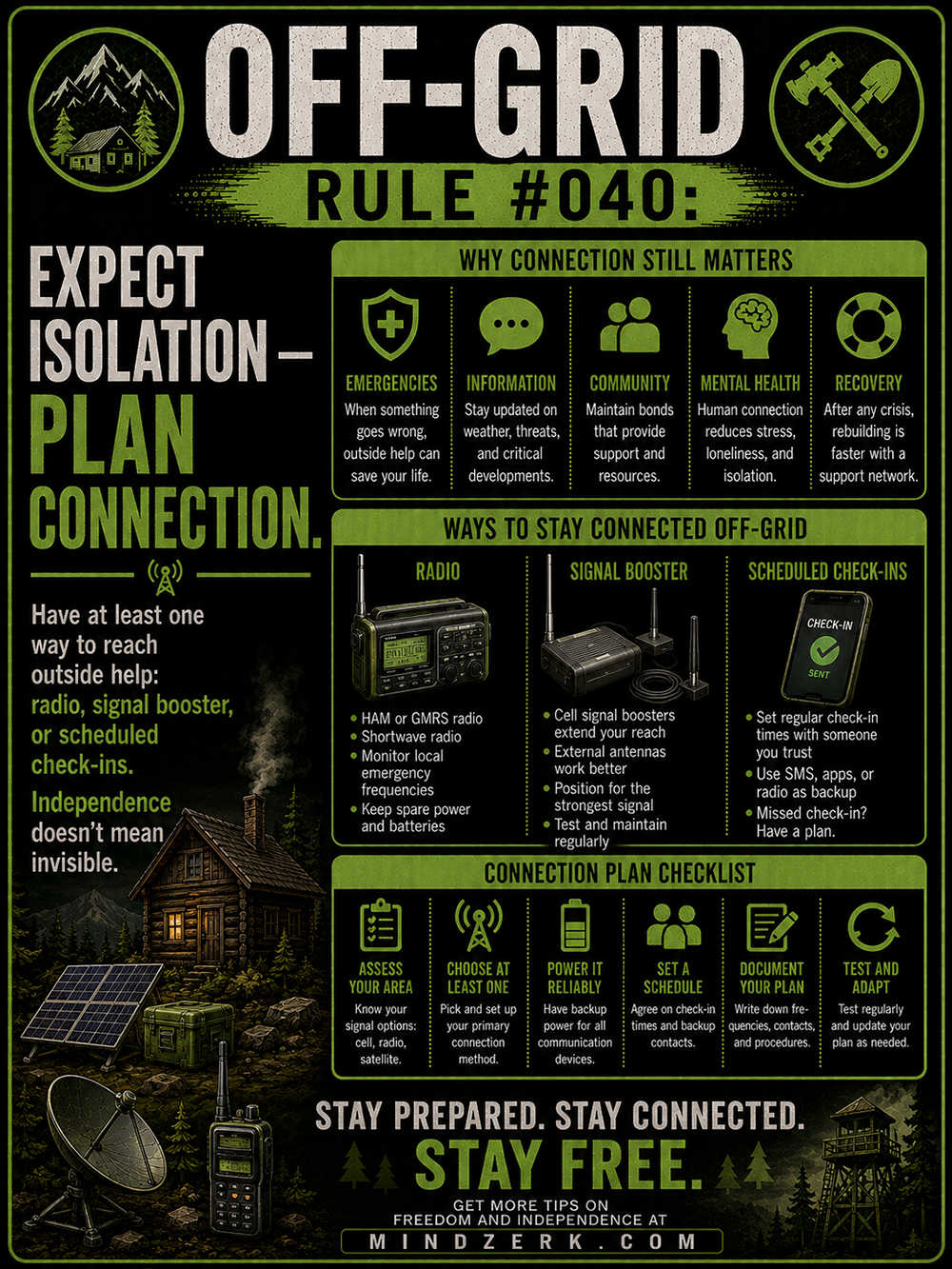
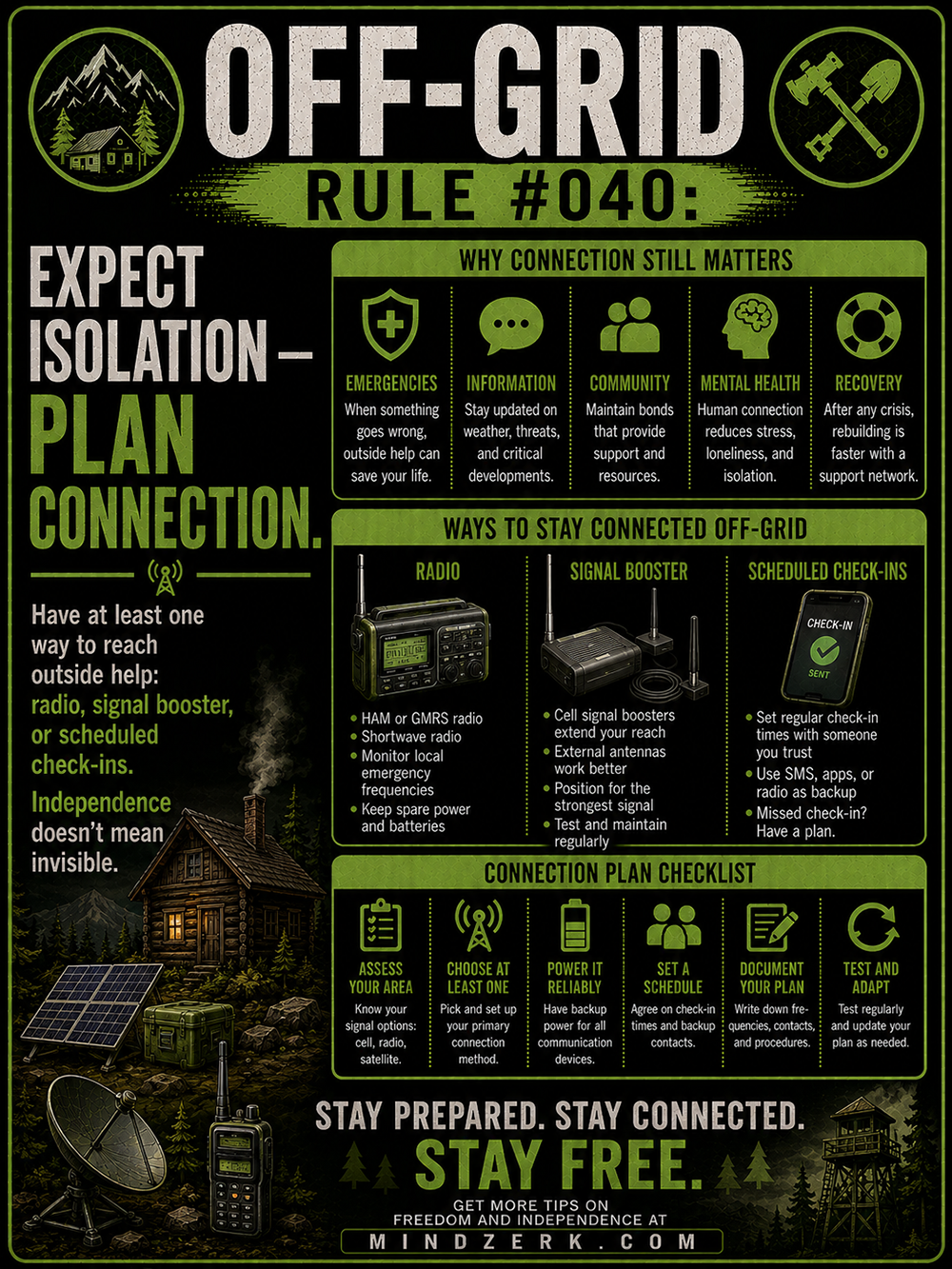
Why Connection Still Matters
Going off-grid reduces your dependence on centralized systems.
It doesn’t eliminate your dependence on other people.
Humans have always survived through networks.
The smartest homesteaders, ranchers, and backcountry travelers understand that community is equipment.
Emergencies
This is the obvious one.
A fall from a ladder.
A chainsaw accident.
A wildfire.
A medical emergency.
A vehicle breakdown.
A sudden illness.
When something goes wrong, outside help can literally save your life.
A communication plan is just as important as your first aid kit.
Information
Off-grid doesn’t mean disconnected from reality.
Weather warnings.
Wildfire updates.
Road closures.
Flood alerts.
Power outages.
Community notices.
Staying informed helps you make better decisions before problems become disasters.
Community
No one can do everything alone.
Someone might have a spare part.
Someone might have a tractor.
Someone might know a mechanic.
Someone might watch your property while you’re away.
Strong communities solve problems faster than isolated individuals.
Mental Health
Isolation can be peaceful.
Too much isolation can become loneliness.
Humans are social creatures.
A conversation.
A visit from friends.
A regular phone call.
A weekly coffee trip into town.
Small connections help maintain perspective and reduce stress.
Recovery
After emergencies, recovery often depends on your network.
Neighbors help clear fallen trees.
Friends loan equipment.
Family checks in.
Communities rebuild together.
A support system speeds recovery from almost every crisis.
Ways to Stay Connected Off-Grid
You don’t need expensive technology.
You need redundancy.
At least one reliable way to communicate.
Preferably several.
Radio
Radio remains one of the best off-grid communication tools.
HAM radio.
GMRS radios.
Shortwave receivers.
Emergency weather radios.
Unlike cell networks, radio communication can continue working when other systems fail.
Keep spare batteries.
Know local emergency frequencies.
Practice using your equipment before you need it.
Signal Boosters
Cell service may be weak, but weak isn’t always useless.
Signal boosters can extend coverage significantly.
External antennas often improve reception.
Position equipment where signal strength is highest.
Test your setup regularly.
A single extra bar of service might make all the difference during an emergency.
Scheduled Check-Ins
Technology isn’t required for good communication.
Routine is powerful.
Tell someone where you’ll be.
Agree on regular check-in times.
Daily.
Weekly.
Whatever makes sense.
Have a backup plan if someone misses a check-in.
Who calls?
Who drives out?
Who contacts emergency services?
Don’t make these decisions during a crisis.
Build a Connection Plan
Like any off-grid system, communication works best when it’s designed intentionally.
Assess Your Area
Know your options.
Cell coverage.
Radio repeaters.
Internet availability.
Satellite services.
Emergency response times.
Road conditions.
Understand your environment.
Choose Primary Communication
Pick one reliable system.
Maybe it’s a cell phone.
Maybe it’s GMRS.
Maybe it’s satellite messaging.
Maybe it’s HAM radio.
Know how it works.
Practice using it.
Build Backup Power
Communication equipment needs electricity.
Portable batteries.
Solar chargers.
Backup generators.
Vehicle chargers.
Rechargeable battery packs.
Plan for extended outages.
Create a Schedule
Communication works better when it’s routine.
Weekly family calls.
Daily location updates.
Regular weather checks.
Community meetings.
Consistency prevents confusion.
Write It Down
Don’t rely on memory.
Keep important information accessible.
Emergency contacts.
Radio frequencies.
Phone numbers.
Addresses.
Meeting locations.
Evacuation plans.
Instructions for family members.
Paper backups still matter.
Test and Adapt
Plans are only useful if they work.
Practice radio communication.
Test backup batteries.
Try emergency procedures.
Review your check-in schedule.
Update contacts.
Fix weaknesses before they become failures.
The Off-Grid Paradox
Many people move off-grid to gain independence.
Ironically, successful off-grid living often strengthens community.
You trade anonymous convenience for meaningful relationships.
You know your neighbors.
You trade skills.
You share tools.
You help each other.
You build trust.
That network becomes one of your greatest assets.
Technology Is a Tool, Not a Guarantee
Modern technology is incredible.
Cell phones.
Satellite internet.
GPS.
Emergency beacons.
Weather apps.
Use them.
But don’t depend on any single system.
Batteries fail.
Equipment breaks.
Storms interrupt service.
Redundancy wins.
The best communication plan combines old and new technology.
Radio plus phone.
Satellite plus check-ins.
Digital plus paper backups.
Simple beats complicated.
Reliable beats fancy.
Independence Doesn’t Mean Isolation
There’s a difference between solitude and isolation.
Solitude is a choice.
Isolation can become a problem.
The goal of off-grid living isn’t to disappear from the world.
It’s to reduce unnecessary dependence while keeping meaningful connections.
Strong people ask for help when they need it.
Strong communities help each other.
Strong systems plan ahead.
Stay Prepared. Stay Connected. Stay Free.
The rugged individual surviving completely alone is mostly a myth.
History tells a different story.
Homesteads traded with neighbors.
Mountain communities shared resources.
Ranchers checked on one another.
Remote families maintained communication routes.
The most resilient people weren’t the most isolated.
They were the best connected.
So build your solar array.
Install your water tanks.
Stock your pantry.
Maintain your equipment.
But don’t forget one of the most important systems you’ll ever build.
Your connection to the outside world.
Because freedom isn’t about disappearing.
It’s about having choices.
And sometimes, the smartest off-grid tool you own isn’t a generator, a solar panel, or a water filter.
It’s a radio.
A friend.
A neighbor.
A scheduled check-in.
A simple plan that says:
“If something goes wrong, someone knows where I am.”
That’s not dependence.
That’s resilience.