
Power failures rarely happen when it’s convenient.
They happen during storms.
After accidents.
During wildfire evacuations.
When roads are closed.
When the generator won’t start.
Or when you suddenly realize the flashlight in the drawer hasn’t been charged in months.
Preparedness isn’t just about owning the right equipment.
It’s about making sure that equipment is ready when you need it.
That’s why:
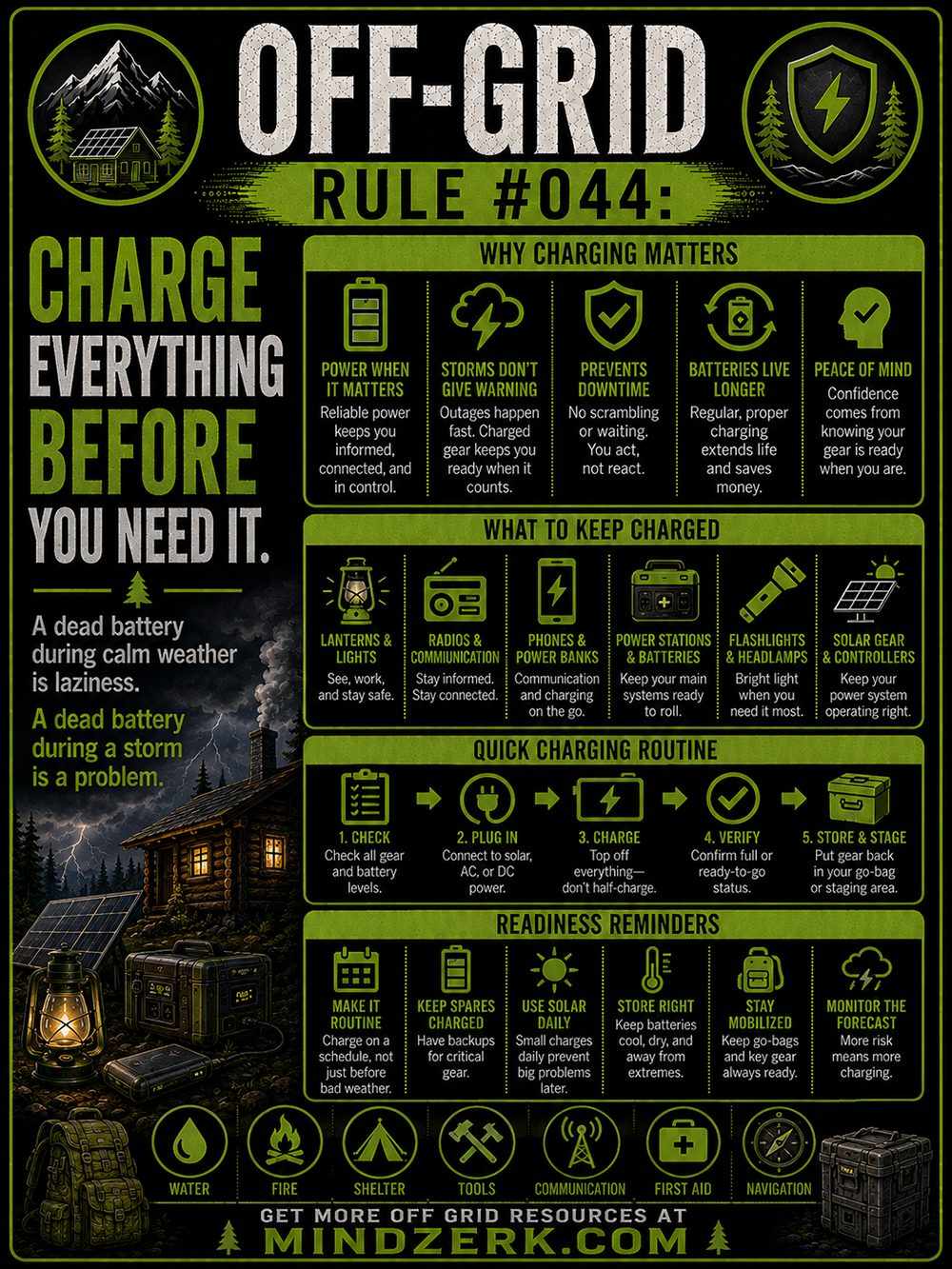
A dead battery during calm weather is laziness.
A dead battery during a storm is a problem.
Why Charging Matters
Modern off-grid life depends on rechargeable equipment.
Flashlights.
Power stations.
Radios.
Phones.
Battery-powered tools.
Portable medical devices.
All of them are useless once the battery reaches zero.
Charging isn’t something you do after the emergency begins.
It’s something you do before it ever arrives.
Power Matters Most When You Can’t Get It
When the grid is running, charging something later is easy.
When the power goes out, your options shrink quickly.
A fully charged battery gives you choices.
An empty one gives you problems.
Power stored today becomes peace of mind tomorrow.
Storms Don’t Send Invitations
Bad weather rarely announces itself with enough warning to prepare everything.
Power outages often happen before the rain stops.
Wildfires can force rapid evacuations.
Strong winds knock down power lines in minutes.
If you’re waiting until conditions get worse, you’re already behind.
Treat every normal day as an opportunity to prepare for an abnormal one.
Prevent Downtime Before It Starts
Many people think preparedness is reacting quickly.
In reality, preparedness is reducing the need to react at all.
A fully charged flashlight means you don’t search for batteries in the dark.
A charged radio means you immediately hear emergency broadcasts.
A charged power station means your refrigerator, communications, or medical equipment keeps running without panic.
Preparation replaces scrambling with confidence.
Batteries Last Longer When They’re Maintained
Rechargeable batteries are consumable items.
But how you treat them affects how long they last.
Regular charging and proper storage help extend battery life.
Ignoring batteries for months at a time often leads to:
- Reduced capacity
- Deep discharge damage
- Corrosion
- Unexpected failure
Your batteries are an investment.
Take care of them before they become expensive replacements.
Peace of Mind Comes From Readiness
One of the greatest benefits of preparedness isn’t physical.
It’s mental.
Knowing every critical device is charged allows you to focus on solving problems instead of worrying about preventable ones.
Confidence grows from good habits.
What You Should Keep Charged
Think beyond your phone.
Every battery-powered tool has a job.
Lanterns and Lights
Lighting keeps you safe.
Recharge lanterns and flashlights regularly so they’re ready for power outages, nighttime repairs, or emergencies.
Radios
Weather alerts.
Emergency broadcasts.
Local communication.
A charged radio may become your most valuable source of information when internet service disappears.
Phones and Power Banks
Your phone is often your camera, GPS, emergency contact, flashlight, and communication hub.
Backup power banks extend its usefulness when electricity is unavailable.
Portable Power Stations
Portable battery systems can power:
- Refrigerators
- Medical equipment
- Fans
- Laptops
- Communication devices
- Small appliances
Keep them topped off so they are ready to work immediately.
Flashlights and Headlamps
Hands-free lighting is invaluable when making repairs or moving around safely after dark.
Check them before you need them.
Not after.
Solar Equipment
Solar panels don’t store power.
Batteries do.
Inspect controllers, cables, and battery banks regularly to ensure your charging system is working properly.
Build a Quick Charging Routine
Charging becomes easy when it becomes routine.
1. Check Everything
Once a week—or before any forecasted storm—check battery levels on your critical equipment.
Don’t assume they’re ready.
Verify.
2. Plug In
Use whatever charging source makes sense:
- Solar
- Grid power
- Generator
- Vehicle
- DC charging systems
Take advantage of available power while you have it.
3. Charge Fully
Half-charged gear creates false confidence.
Whenever practical, top batteries off completely.
4. Verify
Look at the indicator lights.
Confirm charging actually completed.
A loose cable or faulty charger can leave equipment only partially charged.
5. Store It Ready
Return charged equipment to its designated location.
Every family member should know where to find:
- Flashlights
- Radios
- Power banks
- Emergency batteries
A charged tool hidden somewhere random is almost as bad as an empty one.
Readiness Habits That Pay Off
Small routines prevent big problems.
Make Charging Routine
Pick a regular schedule.
Every Sunday.
The first day of each month.
Before every storm.
Consistency beats memory.
Keep Backup Batteries Charged
Don’t rely on a single battery.
Keep extras ready for critical devices.
Redundancy creates resilience.
Use Solar Every Day
Even small daily charging sessions help keep batteries healthy.
Sunlight is free.
Use it whenever possible.
Store Batteries Properly
Heat destroys batteries faster than almost anything else.
Store them:
- Cool
- Dry
- Out of direct sunlight
- Away from freezing temperatures when possible
Proper storage extends both performance and lifespan.
Stay Ready to Move
Emergency equipment should never be scattered around the house.
Keep go-bags, power banks, radios, and charging cables organized so they can leave with you in minutes.
Watch the Forecast
The weather is one of the best reminders to prepare.
If storms, high winds, wildfire conditions, or extreme temperatures are expected, treat that as your signal to recharge everything.
Preparation is easier before conditions deteriorate.
Stored Power Is Stored Freedom
Off-grid living isn’t about avoiding technology.
It’s about using technology wisely.
A charged battery represents options.
Communication.
Lighting.
Information.
Medical support.
Mobility.
Comfort.
The best time to charge your equipment isn’t during an emergency.
It’s while everything is still calm.
Because preparedness is built in ordinary moments—not desperate ones.
Take advantage of every opportunity to store energy before you need it.
When the lights go out, you’ll be glad you did.
Charge today. Stay ready tomorrow.