
We’ve been trained to share.
Post it.
Tag it.
Comment on it.
Explain yourself.
But in a world where everything is tracked, stored, analyzed, and connected…
Every piece of information you share becomes a piece of leverage you give away.
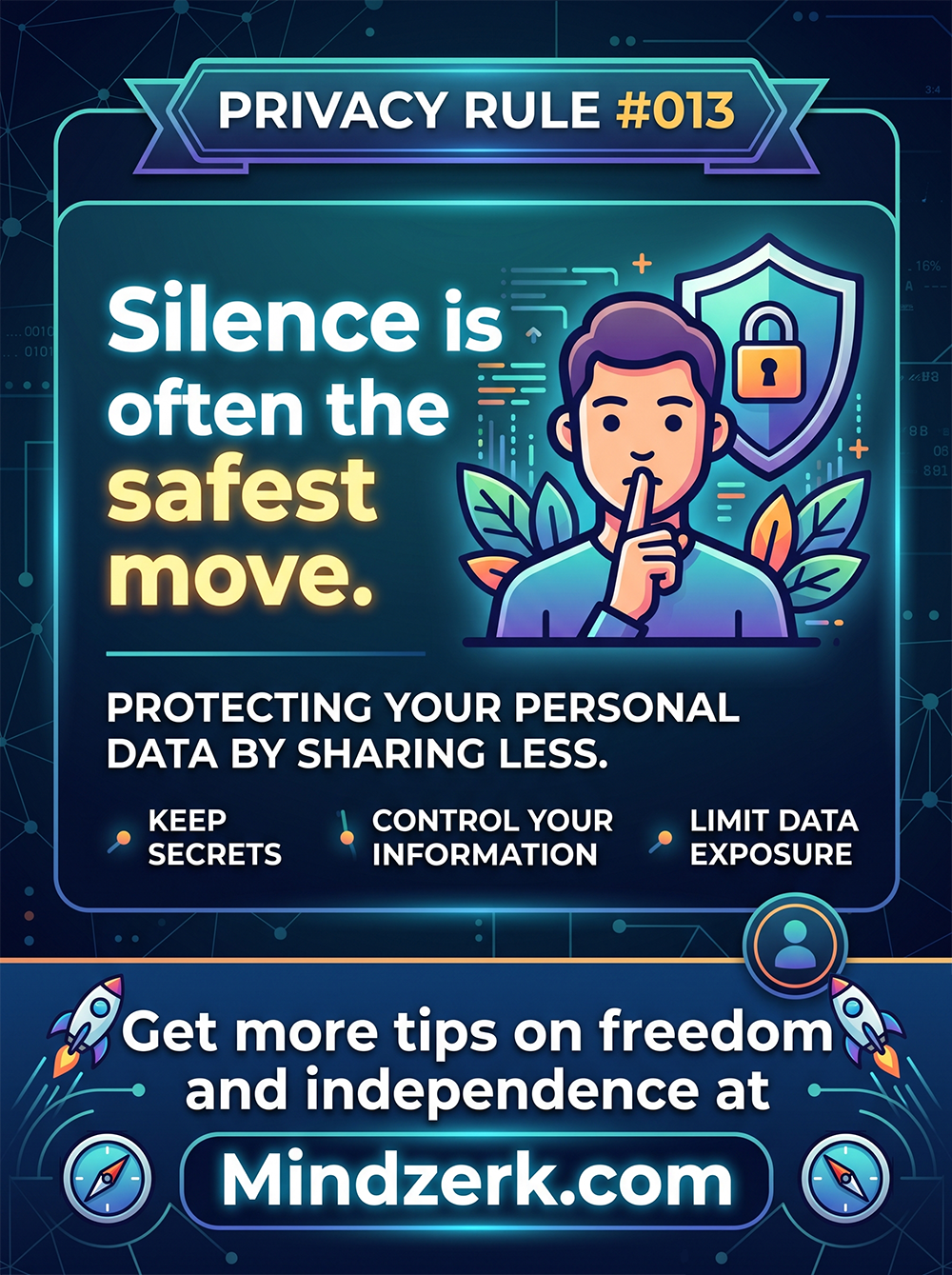
Sometimes the smartest move isn’t better security.
It’s saying less.
The Hidden Cost of Sharing
Most people think privacy risks come from hacks.
But the bigger risk is voluntary exposure.
- You post your routine
- You reveal your interests
- You share your opinions
- You document your life
Individually, it feels harmless.
Together, it builds a profile.
A very detailed one.
Why Silence Works
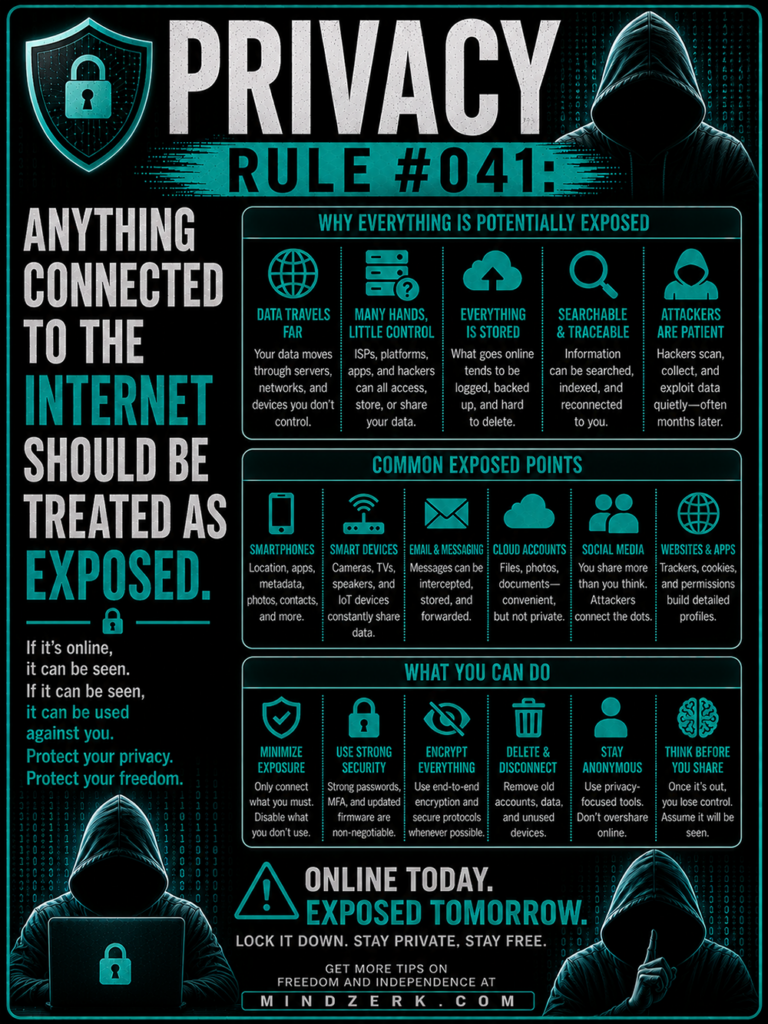
Silence isn’t about hiding.
It’s about control.
When you don’t share:
- There’s nothing to analyze
- Nothing to aggregate
- Nothing to weaponize
No data is the strongest form of data protection.
What “Sharing Less” Actually Means
This isn’t about disappearing.
It’s about being intentional.
1. Keep Some Things Private
Not everything needs to be public.
- Your location
- Your habits
- Your plans
- Your personal details
If it doesn’t need to be known, don’t say it.
2. Control Your Information Flow
Decide what goes out—and where.
- Separate personal and public identities
- Limit what each platform knows about you
- Avoid linking everything together
Think in compartments.
3. Reduce Exposure Points
Every app, account, and post is a surface area.
More exposure = more risk.
Cut it down:
- Fewer platforms
- Fewer posts
- Fewer connections
The Psychology Trap
Sharing feels good.
- Validation
- Attention
- Connection
But platforms are built to reward oversharing.
Because your data is the product.
The more you share, the easier you are to understand, predict, and influence.
When Silence Is Power
Silence protects you in ways most people overlook:
- You can’t be profiled easily
- You can’t be targeted as precisely
- You don’t create patterns that expose you
You become harder to map.
Harder to predict.
Harder to exploit.
Where People Go Wrong
1. They Overshare by Default
Posting everything without thinking:
- Locations
- Purchases
- Daily routines
This builds a clear behavioral pattern.
2. They Confuse Visibility with Value
Just because you can share doesn’t mean you should.
Not every moment needs an audience.
3. They Trust Platforms Too Much
Even if you delete something:
- It may be stored
- It may be archived
- It may be analyzed
Once shared, control is gone.
How to Apply This Rule
1. Pause Before You Post
Ask:
- Does this need to be public?
- Could this reveal a pattern?
- Would this matter if used against me?
If there’s doubt—skip it.
2. Share Delayed, Not Live
Avoid real-time updates of:
- Your location
- Your plans
- Your movements
Post after the fact—or not at all.
3. Use Layers of Identity
Don’t tie everything together.
- Separate accounts
- Different emails
- Different purposes
Break the chain.
4. Trim Your Digital Footprint
Audit your presence:
- Old accounts
- Unused apps
- Excess permissions
Less surface area = less risk.
5. Get Comfortable Saying Nothing
You don’t owe the internet:
- Your thoughts
- Your reactions
- Your explanations
Silence is a valid response.
The Strategic Advantage
Most people are loud.
They broadcast everything.
That gives you an edge.
When others overshare, restraint becomes power.
You don’t just protect yourself—you become harder to read, harder to influence, and harder to track.
Final Thought
Privacy isn’t just about tools.
It’s about behavior.
The less you reveal, the less can be used against you.
Silence isn’t weakness—it’s strategy.
Share with purpose.
Or don’t share at all.