
Most people underestimate how important fire really is until they don’t have it.
Fire is not just comfort.
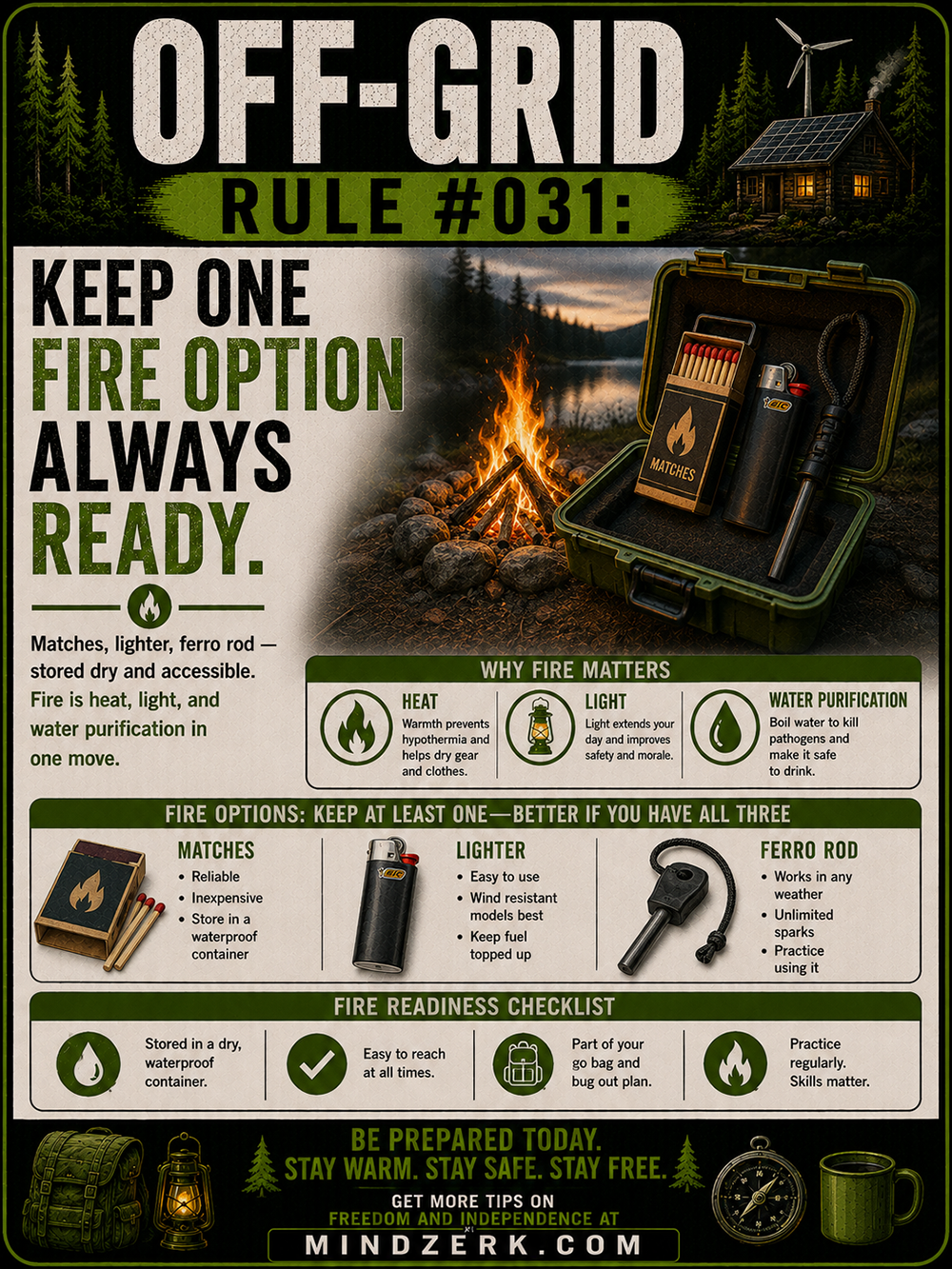
It’s:
- heat
- light
- cooking
- water purification
- morale
- survival
One small flame can completely change a bad situation.
That’s why every off-grid setup should always have at least one ready-to-go fire option available at all times.
Not buried in storage.
Not hidden somewhere “safe.”
Ready.
Accessible.
Dry.
Because when conditions get bad, simplicity matters.
Fire Solves Multiple Problems at Once
A good fire provides immediate advantages:
- warmth during cold weather
- the ability to boil unsafe water
- emergency cooking capability
- light after dark
- a psychological boost during stressful situations
People often focus heavily on:
- batteries
- solar panels
- gear
- technology
But fire remains one of the oldest and most reliable survival tools ever created.
Even advanced systems fail sometimes.
Fire still works.
The Biggest Mistake: Assuming You’ll Figure It Out Later
Most people treat fire-starting like an afterthought.
They assume:
- they’ll find dry wood
- the lighter will work
- the matches stayed dry
- they’ll remember where the ferro rod is
- conditions will be easy
That’s dangerous thinking.
Cold weather, rain, wind, stress, fatigue, and darkness make simple tasks harder.
Preparation removes hesitation.
Why You Need Redundancy
One fire option is good.
Multiple fire options are better.
Because every method has weaknesses.
Matches
Pros:
- cheap
- lightweight
- reliable
- simple
Cons:
- vulnerable to water
- limited quantity
- easy to damage
Store them in waterproof containers.
Lighters
Pros:
- fast
- easy
- convenient
Cons:
- fuel runs out
- cold weather affects performance
- mechanical failure happens
Keep extras.
Rotate them occasionally.
Ferro Rods
Pros:
- works in wet conditions
- lasts a long time
- creates hot sparks
- no fuel required
Cons:
- requires practice
- harder for beginners
A ferro rod is excellent backup insurance.
But practice before you actually need it.
Accessibility Matters More Than Ownership
A fire kit buried under boxes is almost useless during an emergency.
Your fire-starting tools should be:
- easy to reach
- protected from moisture
- organized
- portable
A small waterproof case works extremely well.
Many experienced off-grid people keep:
- one fire kit indoors
- one in a backpack
- one in a vehicle
- one in emergency storage
Redundancy reduces risk.
Fire Readiness Is a Skill, Not Just Gear
Owning tools doesn’t equal preparedness.
Skill matters.
Practice:
- starting fires in wind
- starting fires after rain
- using different tinder
- working with limited materials
- lighting fires quickly
Most people only practice under ideal conditions.
Reality rarely gives ideal conditions.
Small experience gained now prevents panic later.
Fire and Water Purification
One overlooked benefit of fire is water safety.
If filtration fails, batteries die, or water sources become questionable:
- boiling water still works
Heat kills pathogens.
That alone makes fire one of the most important off-grid tools available.
A simple flame can prevent a serious problem.
Morale Matters Too
People forget this part.
Fire changes atmosphere.
Light and warmth:
- reduce stress
- improve morale
- create calm
- help decision-making
- restore focus
During hard situations, morale affects judgment.
A controlled fire creates stability.
That matters more than most people realize.
Build a Simple Fire Routine
A good off-grid system uses routines.
Regularly check:
- lighter fuel
- match condition
- waterproof containers
- backup supplies
- tinder availability
Don’t assume everything still works months later.
Test your setup.
Rotate supplies.
Stay ready.
Minimal Gear. Massive Value.
Few survival tools provide as much value for so little space and weight.
A small fire kit can:
- keep you warm
- make water safe
- cook food
- create light
- prevent emergencies from escalating
That’s a huge return from a tiny amount of gear.
The Bottom Line
Off-grid living rewards preparation.
Not panic.
Not assumptions.
One reliable fire option can solve multiple survival problems simultaneously.
Matches.
Lighter.
Ferro rod.
At least one should always be ready.
Stored dry.
Easy to access.
Backed up if possible.
Because when systems fail, weather shifts, or situations get rough, fire stops being a convenience.
It becomes infrastructure.