
Most people use one device for everything.
Work.
Banking.
Messaging.
Browsing.
Random apps.
It feels efficient.
It’s not.
The Problem: Everything Mixed Together
When one device handles everything, all your data overlaps.
That means:
- Personal activity mixes with business
- Financial data shares space with casual apps
- Private communication sits next to trackers
One breach… exposes everything.
The Rule: One Device, One Purpose
Assign a single, clear role to each device you rely on.
Not because it’s convenient.
Because it limits damage.
What This Looks Like in Practice
You don’t need a dozen devices.
You just need separation where it matters.
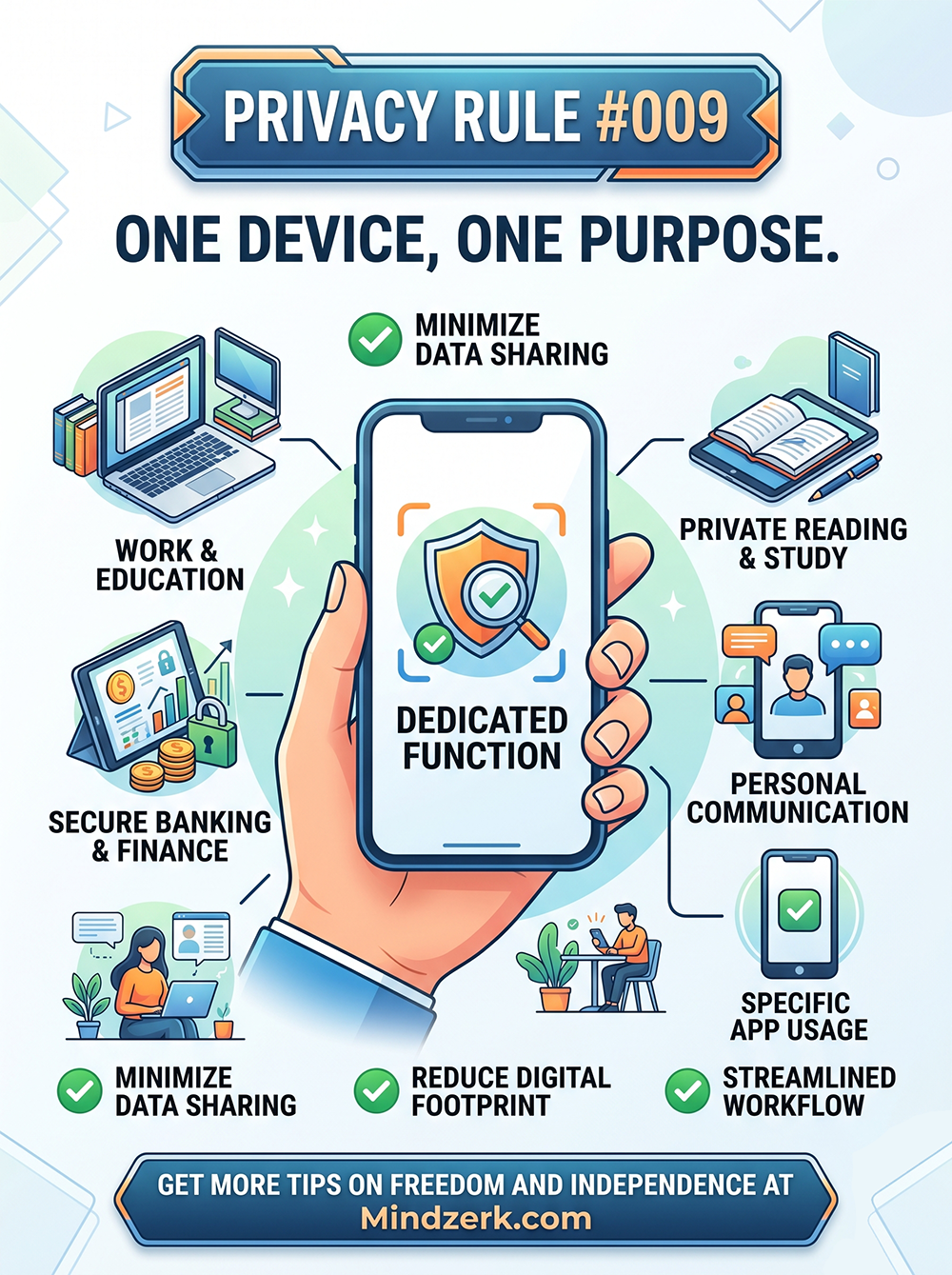
Example Setup
- Work Device
For projects, accounts, and business tools only - Personal Device
Messaging, casual browsing, everyday use - Finance Device (High Security)
Banking, payments, sensitive logins only - Optional Dedicated Use Devices
Reading, research, or specific tasks
Each one has a boundary.
Why This Works
1. Minimizes Data Sharing
Apps and services can’t easily cross-reference everything.
Less overlap = less exposure.
2. Reduces Digital Footprint
Each device carries less information.
Instead of one giant profile…
You have smaller, contained ones.
3. Limits Damage
If one device is compromised:
- The breach is contained
- Other areas stay protected
You don’t lose everything at once.
4. Creates Clear Boundaries
You’re not mixing:
- Work stress with personal life
- Financial risk with casual behavior
It’s cleaner mentally—and digitally.
The Hidden Risk of All-in-One Devices
Convenience creates vulnerability.
When everything lives in one place:
- One login leak spreads everywhere
- One malicious app sees everything
- One mistake has bigger consequences
It’s efficient—until it fails.
Where People Go Wrong
They optimize for simplicity.
They think:
“Everything in one place is easier.”
It is.
Until something goes wrong.
The Better Approach
Think in terms of containment.
Ask:
- If this device is compromised… what gets exposed?
Then limit that answer.
You Don’t Need to Go Extreme
Start small:
- Separate banking from everything else
- Keep work and personal accounts apart
- Avoid installing unnecessary apps on critical devices
Even partial separation makes a difference.
The Principle: Reduce Cross-Contamination
Your data behaves like a system.
When everything connects, risk spreads.
When you separate, risk stays contained.
The Bottom Line
Convenience blends everything together.
Security separates it.
One device doing everything is efficient—but fragile. One device per purpose is stable.
Final Thought
Don’t build one big target.
Build compartments.
When things are separated, problems stay small.