
Off-grid living isn’t just about gear.
It’s about rhythm.
And the most reliable rhythm you have?
The sun.
The Problem: Fighting Natural Cycles
A lot of people try to force a “normal” schedule off-grid.
Late nights.
Artificial light.
Heavy power use after dark.
It works—until it doesn’t.
Because off-grid systems have limits.
And night pushes those limits fast.
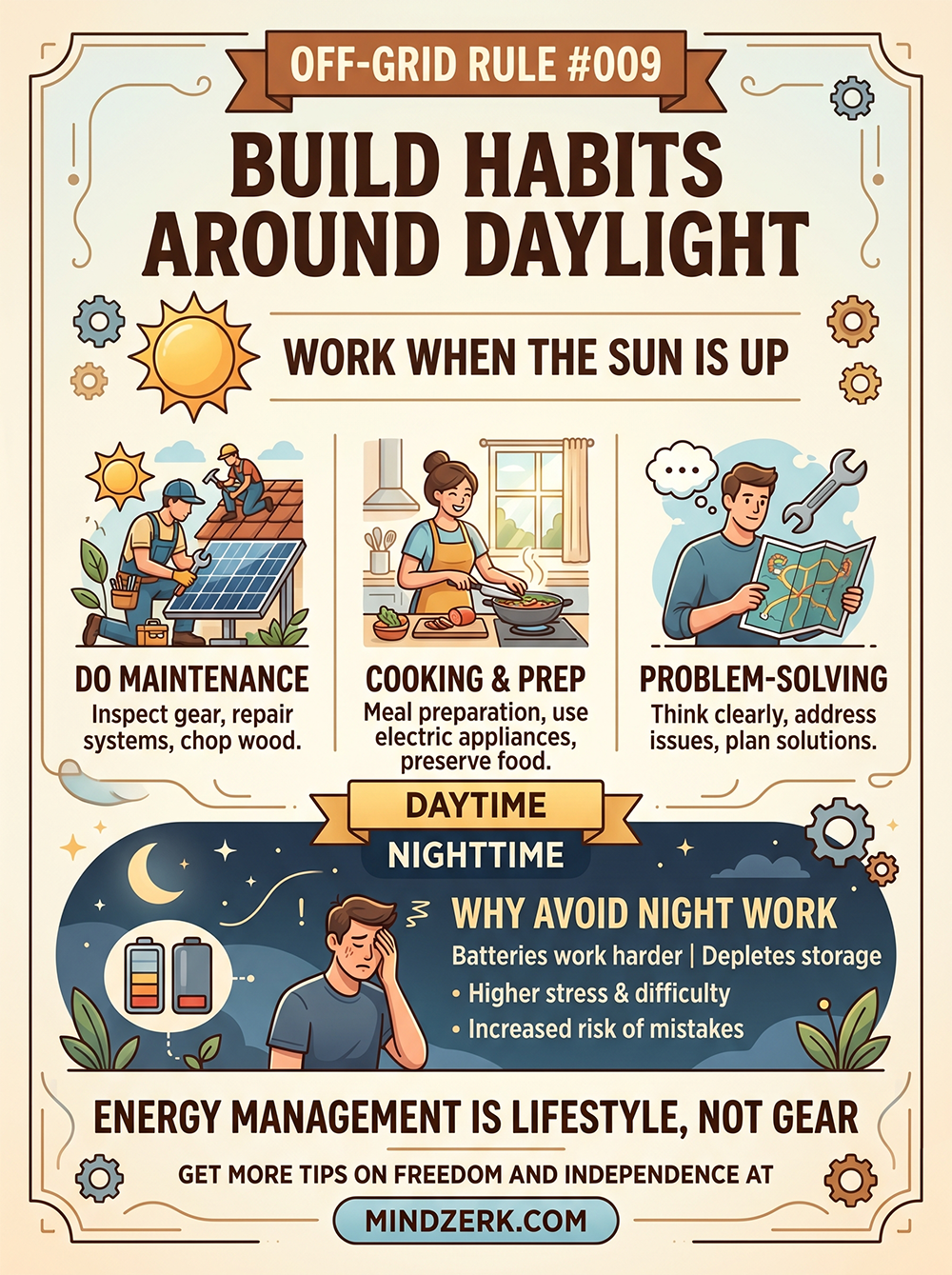
The Rule: Align Your Work With Daylight
Do your most important work when the sun is up.
That’s when:
- Power is available
- Visibility is highest
- Energy is naturally higher
You’re working with your environment, not against it.
What Belongs in Daylight Hours
1. Maintenance Work
Daytime is for physical systems.
- Inspect gear
- Repair equipment
- Chop wood
- Check connections
You can see clearly.
You can work safely.
2. Cooking & Prep
Use available energy when it’s easiest to access.
- Meal prep
- Food preservation
- Running appliances
Solar? This is your window.
3. Problem-Solving
Your brain works better in daylight.
- Planning
- Fixing issues
- Making decisions
Less stress. Fewer mistakes.
What Happens at Night
Everything costs more.
- Batteries drain
- Storage gets used
- Mistakes increase
- Stress goes up
Even simple tasks feel harder.
Why Night Work Is Risky
Night work creates friction:
- Limited visibility
- Higher fatigue
- Reduced focus
- More system strain
You burn more energy—both yours and your system’s.
The Hidden Cost: Battery Drain
Every light, tool, or device at night pulls from storage.
That means:
- Less reserve
- Less margin for error
- More vulnerability if something goes wrong
Daytime gives you incoming energy.
Nighttime only takes.
The Real Principle: Energy Management
This isn’t just about sunlight.
It’s about energy—both:
- System energy (power, fuel, storage)
- Personal energy (focus, strength, clarity)
Daylight multiplies both. Night reduces both.
Where People Go Wrong
They treat energy like it’s unlimited.
So they:
- Work late
- Use lights heavily
- Ignore system drain
Then wonder why everything feels harder.
The Better Approach
Shift your habits.
- Front-load your day
- Finish critical work early
- Let nighttime be low-demand
Use the night for:
- Rest
- Light tasks
- Recovery
The Lifestyle Shift
Off-grid success isn’t about having better gear.
It’s about better timing.
Energy management is a lifestyle, not a tool.
The Bottom Line
The sun is your most reliable resource.
Use it.
Work when energy is abundant—rest when it’s not.
Final Thought
You can fight the cycle…
Or you can ride it.
The closer your habits match daylight, the easier everything gets.