

One of the biggest mistakes people make with preparedness is assuming stored supplies last forever.
They don’t.
Fuel degrades.
Food expires.
Containers fail.
Seals crack.
Moisture creeps in.
Heat destroys quality.
A lot of people spend years building emergency reserves only to discover:
- Their gasoline won’t ignite properly
- Their diesel is contaminated
- Their food is expired
- Their generators gum up
- Their supplies became useless when they were finally needed
Preparedness is not just about storage.
It’s about maintenance.
That’s why rotation matters.
Use the oldest first.
Replace what you use.
Keep supplies moving.
A little rotation today prevents major problems tomorrow.
Stored Fuel Is Not Permanent
Many people assume gasoline can sit untouched for years.
Bad idea.
Gasoline begins degrading surprisingly fast, especially:
- In heat
- In poor containers
- With exposure to air
- Without stabilizers
Old gasoline can:
- Fail to ignite properly
- Damage engines
- Clog carburetors
- Gum up fuel systems
- Leave generators unreliable
That becomes a serious problem during emergencies.
The worst time to discover your fuel is bad is when:
- The power goes out
- Roads close
- Supply chains stop
- Wildfire evacuation starts
- Winter storms hit
Verification and rotation keep systems alive.
Diesel Has Different Problems
Diesel often stores longer than gasoline.
But it has its own weaknesses:
- Water contamination
- Algae growth
- Sediment buildup
- Cold-weather gelling
Diesel systems still require:
- Rotation
- Inspection
- Proper containers
- Water management
Ignoring diesel maintenance creates expensive failures.
Propane Stores Extremely Well
Propane is one of the best long-term energy storage options.
Unlike gasoline:
- It doesn’t degrade quickly
- It stores safely in proper tanks
- It lasts for years
But propane systems still require:
- Leak checks
- Valve inspections
- Regulator maintenance
- Safe storage practices
Even reliable systems need periodic attention.
Food Storage Also Requires Rotation
A lot of people buy emergency food once and forget about it.
That creates waste.
Even canned food eventually:
- Loses quality
- Degrades nutritionally
- Develops rust
- Risks seal failure
Dry goods can absorb:
- Moisture
- Odors
- Pests
Rotation solves this.
The smartest preparedness systems integrate stored food into daily life.
Instead of:
“Emergency-only supplies”
Think:
“Working inventory.”
Use what you store.
Store what you use.
That creates freshness naturally.
Rotation Saves Money
People often think rotation creates more work.
Actually:
Neglect creates more expense.
Expired supplies mean:
- Rebuying inventory
- Replacing damaged equipment
- Wasted food
- Failed generators
- Emergency failures
A rotating system:
- Reduces waste
- Prevents spoilage
- Extends equipment life
- Keeps supplies usable
Preparedness should create resilience, not clutter.
The Psychology Of False Security
One of the most dangerous things in preparedness is:
Thinking you’re ready when you aren’t.
A shelf full of expired supplies creates false confidence.
That confidence disappears quickly during real emergencies.
Preparedness is not:
- Owning gear
- Filling shelves
- Stacking containers
Preparedness is:
- Reliable systems
- Maintained systems
- Verified systems
Rotation is part of operational readiness.
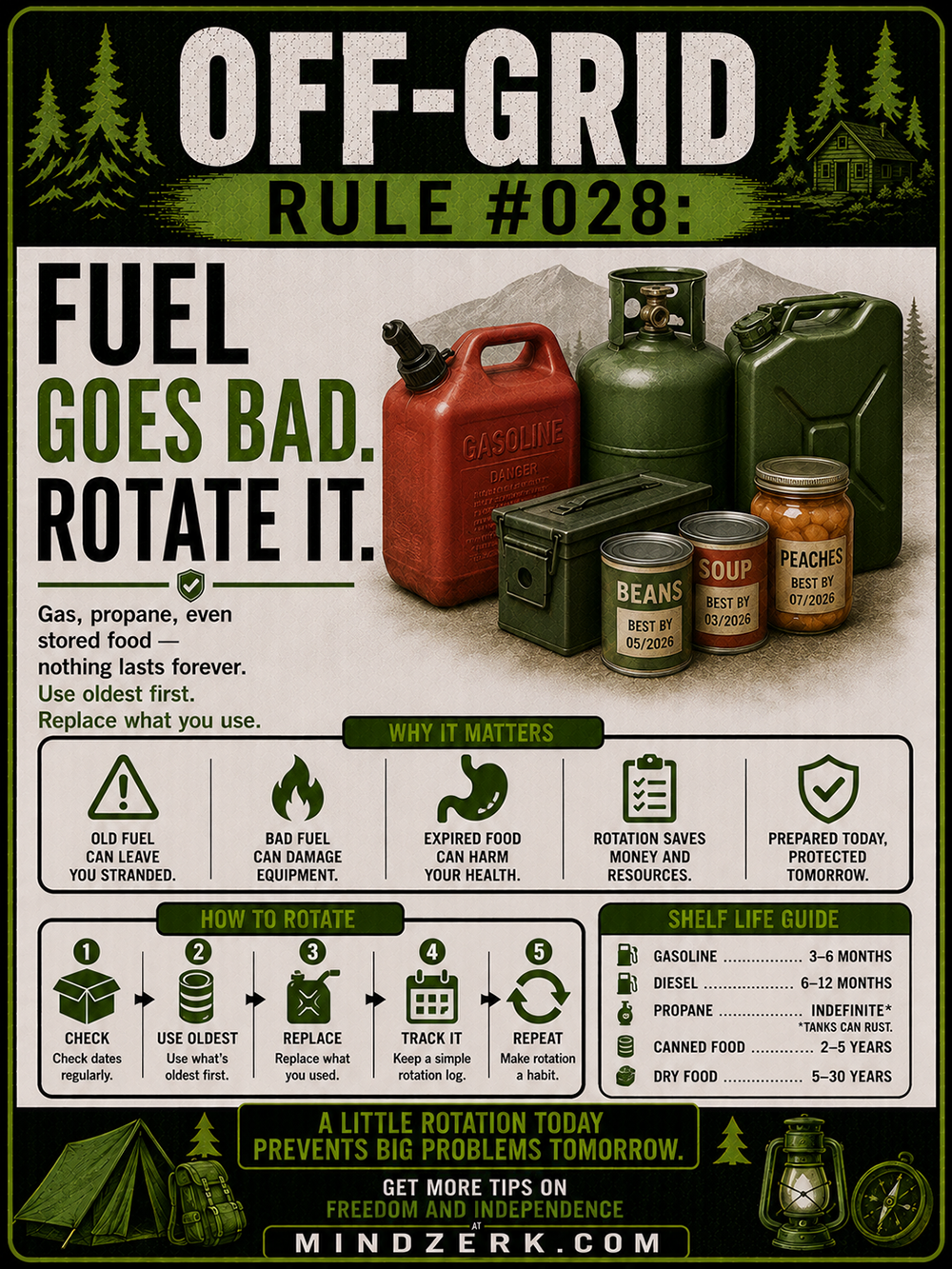
Why Rotation Matters
Old Fuel Can Leave You Stranded
Engines depend on clean, usable fuel.
Bad fuel creates failures when reliability matters most.
Bad Fuel Damages Equipment
Generators and engines are expensive.
Contaminated or degraded fuel destroys systems over time.
Expired Food Risks Health
Emergency situations are already stressful.
Food poisoning or compromised nutrition makes them worse.
Rotation Saves Resources
Using inventory intelligently prevents waste and unnecessary replacement costs.
Prepared Today, Protected Tomorrow
Small maintenance habits create long-term resilience.
How To Rotate Supplies Properly
1. Check Dates Regularly
Inspect:
- Fuel containers
- Food expiration dates
- Water storage
- Batteries
- Medical supplies
Do this routinely.
Not once every few years.
2. Use The Oldest First
First in.
First out.
This simple rule prevents accumulation of expired inventory.
3. Replace What You Use
Every time something leaves storage:
Replenish it.
Preparedness works best when inventory stays stable.
4. Track Rotation
Simple systems work best:
- Labels
- Marker dates
- Inventory sheets
- Rotation logs
You do not need complexity.
You need consistency.
5. Make It Habitual
Preparedness should become part of normal life.
Not panic behavior.
Small recurring maintenance beats massive emergency scrambling.
Approximate Shelf Life Guide
These vary based on storage conditions, but general ranges are:
Gasoline
Roughly 3–6 months untreated.
Longer with stabilizers and proper storage.
Diesel
Roughly 6–12 months depending on conditions.
Propane
Very long-term if tanks remain intact and safe.
Canned Food
Often 2–5 years or more depending on product and storage conditions.
Dry Goods
Can last years or decades if properly sealed and protected.
Heat Accelerates Decay
Temperature matters more than many people realize.
Heat speeds up:
- Fuel breakdown
- Food spoilage
- Plastic degradation
- Seal failure
- Battery deterioration
Store supplies:
- Cool
- Dry
- Stable
- Protected from sunlight
Environmental control extends shelf life dramatically.
Preparedness Is A Living System
The best off-grid setups are not giant piles of forgotten supplies.
They are:
- Maintained
- Organized
- Understood
- Regularly used
- Continuously refreshed
A working system always outperforms a neglected stockpile.
Small Maintenance Prevents Big Emergencies
Many disasters begin as:
- Ignored maintenance
- Old supplies
- False assumptions
- Lack of inspection
Rotation prevents:
- Surprise failures
- Wasted money
- Equipment damage
- Dangerous shortages
It is one of the simplest preparedness habits with the biggest long-term payoff.
Final Thought
Preparedness is not about hoarding.
It’s about reliability.
Fuel goes bad.
Food expires.
Systems decay.
That’s reality.
The people who stay ready are not the people with the biggest stockpiles.
They are the people with the most disciplined systems.
Check it.
Use it.
Replace it.
Track it.
Repeat it.
Because when things go wrong:
Reliable supplies matter more than impressive shelves.