
A backup system that has never been tested is not a backup system.
It’s a guess.
A generator sitting untouched for two years is a guess.
A water filter still sealed in the box is a guess.
A battery bank you’ve never tested under load is a guess.
And guesses fail hard during emergencies.
The worst possible time to discover a problem is when the problem is no longer optional.
Test today. Rely tomorrow.
Because off-grid preparedness is not about owning gear.
It’s about knowing the gear actually works.
The Dangerous Illusion of Preparedness
A lot of people feel prepared because they bought equipment.
But ownership is not readiness.
Real readiness means:
- You’ve used the system
- You understand the system
- You know its weaknesses
- You know how to repair it
- You trust it because you tested it
Untested systems create false confidence.
And false confidence is dangerous.
Why Backup Systems Fail
Most failures don’t happen because the gear was cheap.
They happen because nobody checked:
- Fuel quality
- Connections
- Corrosion
- Pressure
- Seals
- Batteries
- Output
- Flow rates
- Load performance
Time quietly destroys neglected systems.
Especially:
- Fuel systems
- Batteries
- Rubber seals
- Electronics
- Pumps
- Filters
Things sitting unused often fail the moment they’re finally needed.
Monthly Testing Changes Everything
The solution is simple:
Use your systems regularly.
Not during emergencies.
Before them.
A monthly check keeps:
- Problems small
- Skills sharp
- Confidence realistic
- Systems functional
Preparedness is a habit, not a shopping list.
What You Should Be Testing
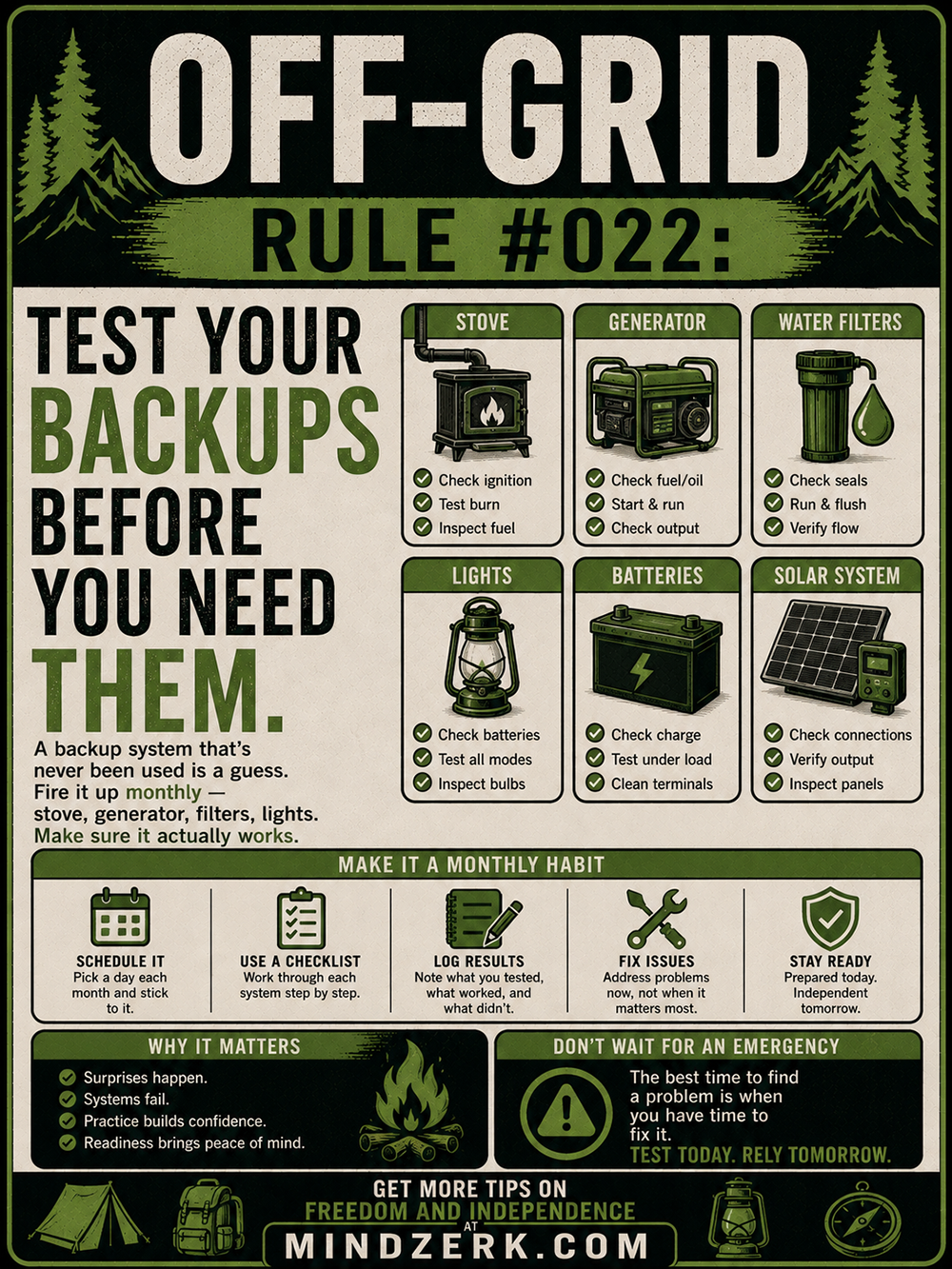
Stove Systems
Check:
- Ignition
- Burn quality
- Fuel supply
- Airflow
- Ventilation
A stove that won’t light during bad weather becomes a serious problem quickly.
Generators
Run them regularly.
Check:
- Fuel condition
- Oil
- Startup reliability
- Output stability
- Noise changes
- Runtime under load
Generators hate sitting unused.
Water Filters
Many people store filters they’ve never actually used.
Test:
- Flow rate
- Seals
- Connections
- Cleaning process
- Taste and output quality
A clogged or damaged filter during an emergency can become catastrophic fast.
Lights and Lanterns
Check:
- Batteries
- Charging systems
- Bulbs
- Fuel
- Different brightness modes
Lighting failures create stress instantly.
Battery Banks
Batteries degrade quietly.
Test:
- Charge retention
- Load performance
- Terminal condition
- Solar charging
- Inverter compatibility
A battery that “looks charged” may collapse under real use.
Solar Systems
Inspect:
- Wiring
- Connections
- Controllers
- Output levels
- Panel condition
Dust, corrosion, loose wiring, and weather damage reduce performance slowly over time.
Make Testing a Habit
Preparedness becomes powerful when it becomes routine.
Instead of “someday,” schedule it.
Use a Monthly Checklist
A checklist removes guesswork.
Go system by system:
- Power
- Water
- Heating
- Cooking
- Lighting
- Communication
- Medical
- Fuel storage
Simple repetition catches problems early.
Log Results
Write down:
- What worked
- What failed
- What changed
- What needs repair
Patterns matter.
A slowly weakening system usually gives warnings before total failure.
Fix Problems Immediately
Tiny issues become large problems through neglect.
A loose connection today becomes system failure later.
A weak battery today becomes dead storage later.
Maintenance compounds just like neglect does.
Why Practice Matters
Testing gear also tests you.
You learn:
- How systems behave
- What breaks first
- What tools you actually need
- What skills you’re missing
- What assumptions were wrong
Experience removes panic.
That matters more than expensive equipment.
Emergencies Magnify Weakness
During normal times:
- You can troubleshoot calmly
- You can order replacement parts
- You can improvise slowly
During emergencies:
- Stress increases
- Conditions worsen
- Time shrinks
- Mistakes multiply
That’s why preparation should happen before pressure arrives.
Readiness Builds Confidence
There’s a huge psychological difference between:
“I hope this works.”
…and:
“I tested this last month.”
Real preparedness reduces fear because it replaces uncertainty with familiarity.
You stop imagining survival.
You start rehearsing it.
The Simplicity Advantage
Complex systems require more testing.
More electronics.
More failure points.
More maintenance.
Simple systems:
- Stay understandable
- Stay repairable
- Stay reliable longer
That’s one reason old-school off-grid systems remain valuable.
Simple systems are easier to trust because they’re easier to verify.
Don’t Wait for the Emergency
A lot of people postpone testing because:
- They’re busy
- Fuel costs money
- Maintenance feels inconvenient
- Everything “probably works”
But preparedness delayed becomes preparedness denied.
The best time to discover a problem is when you still have time to fix it.
The Bottom Line
Backups only matter if they actually function.
Preparedness is not about collecting equipment.
It’s about maintaining capability.
Run the generator.
Test the filters.
Charge the batteries.
Light the stove.
Inspect the systems.
Again and again.
Because when the moment comes, you won’t rise to your intentions.
You’ll fall to the level of your preparation.
Test today.
Stay ready tomorrow.