
Everyone is chasing tools.
New AI drops and people rush in:
- “Is this better?”
- “Should I switch?”
- “What’s the best one?”
They keep hopping from tool to tool…
And never get consistent results.
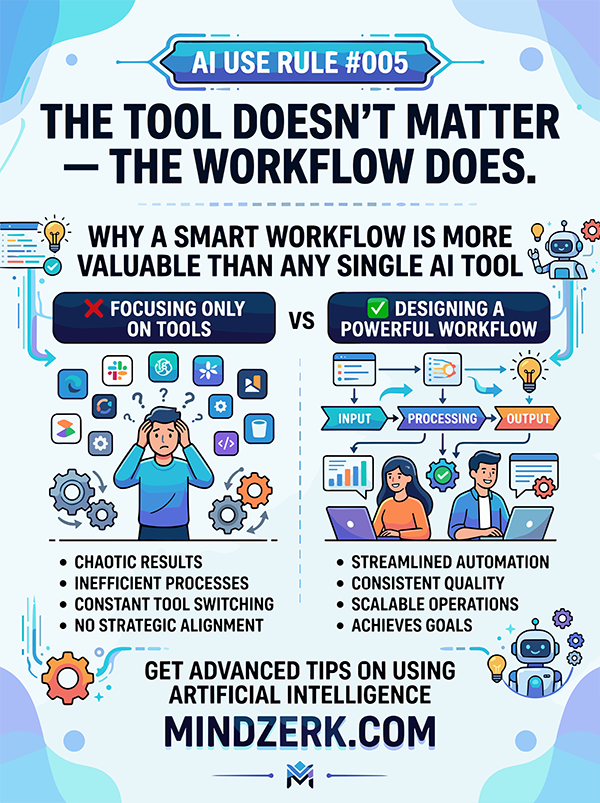
The Problem With Tool Obsession
Tools feel like progress.
But switching tools constantly creates:
- Chaos
- Inconsistency
- Wasted time
You’re always restarting.
Always learning.
Never compounding.
The Rule: Build a Workflow, Not a Tool Stack
The system you use matters more than the tool you use.
A good workflow works with:
- Different tools
- Changing platforms
- New updates
Because it’s built on process—not dependency.
What a Real Workflow Looks Like
Think in stages.
Not tools.
1. Input
Where ideas come from:
- Notes
- Prompts
- Raw concepts
Clear input = better output.
2. Processing
Where AI does its job:
- Expanding ideas
- Structuring content
- Generating drafts
This is where tools fit—but they’re replaceable.
3. Refinement
Where quality happens:
- Editing
- Tightening
- Adjusting tone
This step separates average from strong output.
4. Output
Where it gets used:
- Blog posts
- Products
- Content
- Systems
This is what actually matters.
Why This Works
Because workflows scale.
Once you have a system:
- You can swap tools easily
- You get consistent results
- You move faster
You’re not dependent on any one platform.
The Hidden Advantage: Stability
When a tool changes—or disappears—you don’t panic.
You just replace it.
Your workflow stays intact.
That’s control.
Where People Go Wrong
They build around tools.
They think:
“This tool is my system.”
So when it breaks…
Everything breaks.
The Bottom Line
Tools are temporary.
Workflows last.
If your process depends on one tool, you don’t have a system—you have a risk.
Apply This Everywhere
This idea goes beyond AI.
Think:
- Business operations
- Content creation
- Income systems
Processes outperform platforms.
Final Thought
Stop chasing the “best” tool.
Start building a system that works with any tool.
The winners aren’t using better tools—they’re using better workflows.