
Modern life trains people to move fast.
Click fast.
Reply fast.
Trust fast.
Connect fast.
That speed is convenient.
It is also dangerous.
Scammers know people are distracted.
Manipulators know people are emotional.
Platforms know people rarely verify anything.
And bad actors depend on assumptions.
That’s why one of the strongest privacy habits you can develop is simple:
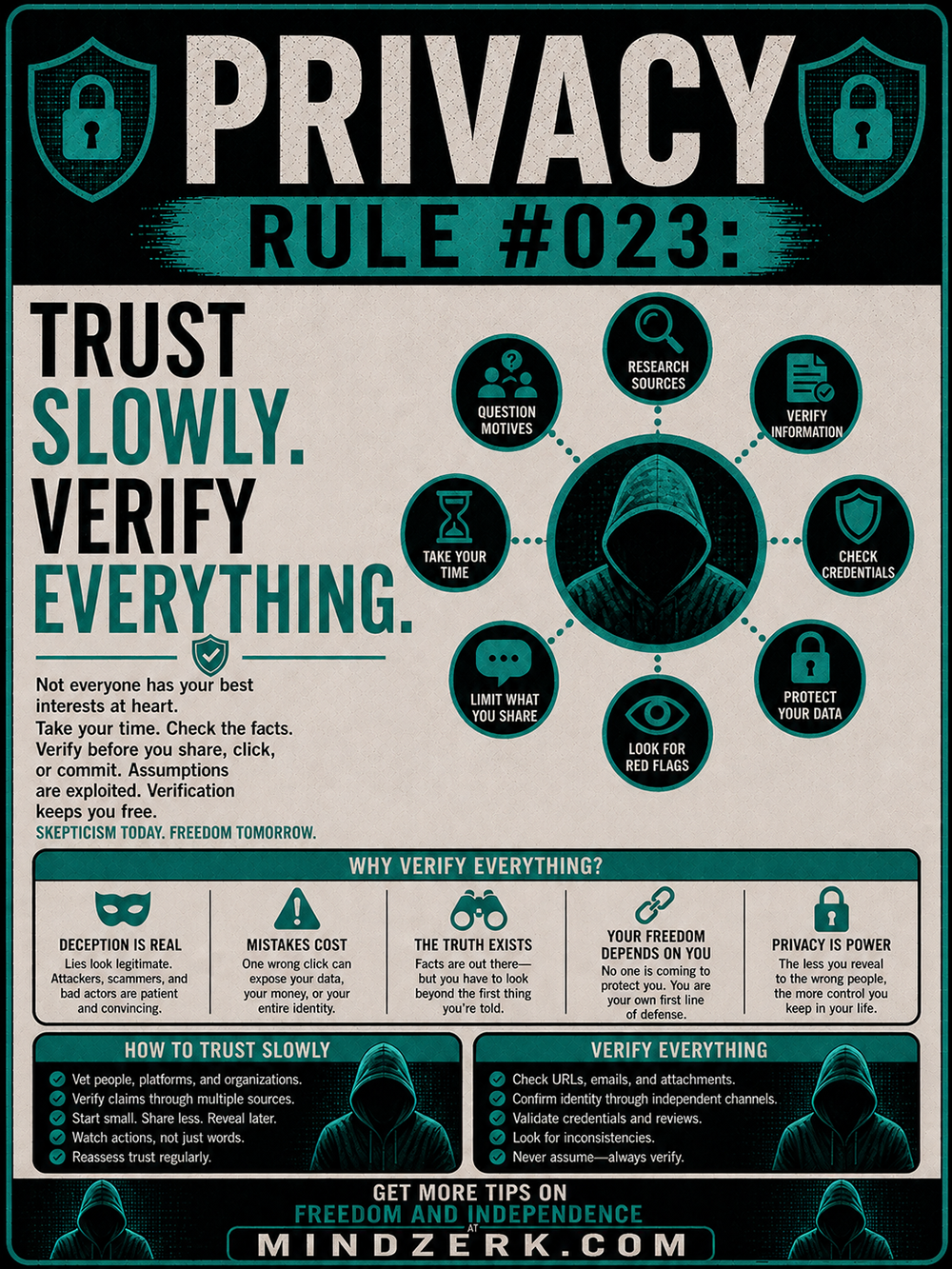
Trust slowly. Verify everything.
Because assumptions get exploited.
Verification keeps you free.
The Internet Is Full of Manufactured Trust
A polished website means nothing.
A verified badge means little.
A professional logo can be copied in minutes.
Fake authority is everywhere now:
- Fake experts
- Fake stores
- Fake screenshots
- Fake emails
- Fake accounts
- Fake urgency
- Fake reviews
- Fake opportunities
AI is accelerating this even further.
What once took a scammer weeks to create can now be generated in hours.
That means blind trust becomes more expensive every year.
Most Attacks Don’t Look Dangerous
The biggest privacy mistakes usually don’t start with obvious danger.
They start with:
- A normal-looking email
- A friendly message
- A convincing opportunity
- A fake login page
- A “quick verification”
- A shared link
- A phone call
- A rushed decision
The goal is rarely technical brilliance.
The goal is emotional bypass.
Fear. Excitement. Urgency. Curiosity. Greed. Sympathy.
Once emotion overrides verification, control is lost.
Why Verification Matters
Deception Is Real
People want to believe:
- Good branding equals legitimacy
- Familiar names equal safety
- Confidence equals truth
But deception often looks polished.
In many cases, the more professional something appears, the more carefully designed the manipulation may be.
Mistakes Cost More Than Time
One careless click can expose:
- Passwords
- Financial accounts
- Contacts
- Identity information
- Business systems
- Private conversations
A few seconds of verification can prevent months of damage.
Your Freedom Depends on You
No company is coming to fully protect you.
No platform guarantees safety.
No algorithm can perfectly filter scams, manipulation, or bad actors.
You are your first layer of defense.
That means developing habits instead of relying on luck.
Trust Should Be Earned Slowly
Healthy privacy habits do not mean paranoia.
They mean restraint.
You do not have to:
- Reveal everything immediately
- Trust people instantly
- Share personal information early
- Accept every opportunity
- Believe every claim
You can slow down.
That pause alone prevents many problems.
How To Trust Slowly
Watch Actions, Not Words
Anybody can:
- Make promises
- Sound intelligent
- Speak confidently
- Build a persona
Consistency matters more.
Patterns matter more.
Behavior over time matters more.
Trust grows through evidence, not presentation.
Start Small
Before committing:
- Test small transactions
- Share limited information
- Observe responses
- Watch for pressure tactics
Real relationships survive patience.
Manipulation often depends on speed.
Reassess Regularly
Trust is not permanent.
People change.
Platforms change.
Businesses change.
Review relationships periodically:
- Who has access to your data?
- Who knows too much?
- What systems are connected?
- What permissions have you forgotten about?
Privacy maintenance is ongoing.
Verify Everything
Check URLs Carefully
One wrong character can lead to:
- Fake login pages
- Malware downloads
- Credential theft
Always inspect:
- Domains
- Email senders
- Redirects
- Attachments
Especially before entering passwords or payment details.
Confirm Through Independent Channels
If somebody claims:
- Urgency
- Payment problems
- Security issues
- Identity verification requests
…verify independently.
Do not trust the contact method provided in the message itself.
Go directly to:
- Official websites
- Known phone numbers
- Verified support channels
Validate Credentials
Not all experts are experts.
Research:
- Backgrounds
- Track records
- Reviews
- History
- Real-world evidence
A polished social profile is not proof of competence.
Look for Inconsistencies
Many scams fail under scrutiny.
Watch for:
- Emotional pressure
- Contradictions
- Rushed timelines
- Strange payment methods
- Avoidance of specifics
- Overpromising
- Unclear identities
Slow thinking exposes weak structures.
Limit What You Share
One of the best privacy strategies is simple:
Share less.
Not everybody needs:
- Your location
- Your routines
- Your plans
- Your financial details
- Your full identity
- Your business systems
The less exposed you are, the fewer attack surfaces exist.
Privacy is often subtraction, not addition.
Skepticism Is a Survival Skill
Modern culture often treats skepticism like negativity.
It isn’t.
Healthy skepticism is:
- Pattern recognition
- Risk awareness
- Emotional discipline
- Strategic caution
Blind trust creates dependency.
Verification creates resilience.
The New Reality
As AI-generated content, scams, impersonation, and synthetic media increase, verification becomes more important than ever.
The people who stay safest will not necessarily be the most technical.
They will be the people who:
- Slow down
- Ask questions
- Verify claims
- Protect information
- Resist emotional manipulation
- Think independently
The future belongs to people who remain difficult to deceive.
Final Thought
Privacy is not built through fear.
It is built through awareness.
You do not need to become isolated from the world.
You simply need to stop giving trust away automatically.
Because once information leaves your control, getting it back is difficult.
So move carefully.
Research deeply.
Watch patterns.
Verify before committing.
And remember:
Skepticism today.
Freedom tomorrow.