
A lot of people romanticize off-grid living.
They picture:
- quiet mornings
- lantern light
- solar panels humming
- coffee beside the wood stove
- freedom from the noise of modern life
And yes, those moments exist.
But real off-grid living is not sustained by motivation.
It’s sustained by routines.
Because motivation fades.
Weather changes.
Energy crashes.
Life gets chaotic.
Systems keep you running anyway.
That’s why one of the most important off-grid lessons is this:
Workflows beat motivation.
Discipline Replaces Guesswork
Off-grid systems require awareness.
If you wait until something breaks to pay attention, you’re already behind.
That’s why routines matter.
Simple habits like:
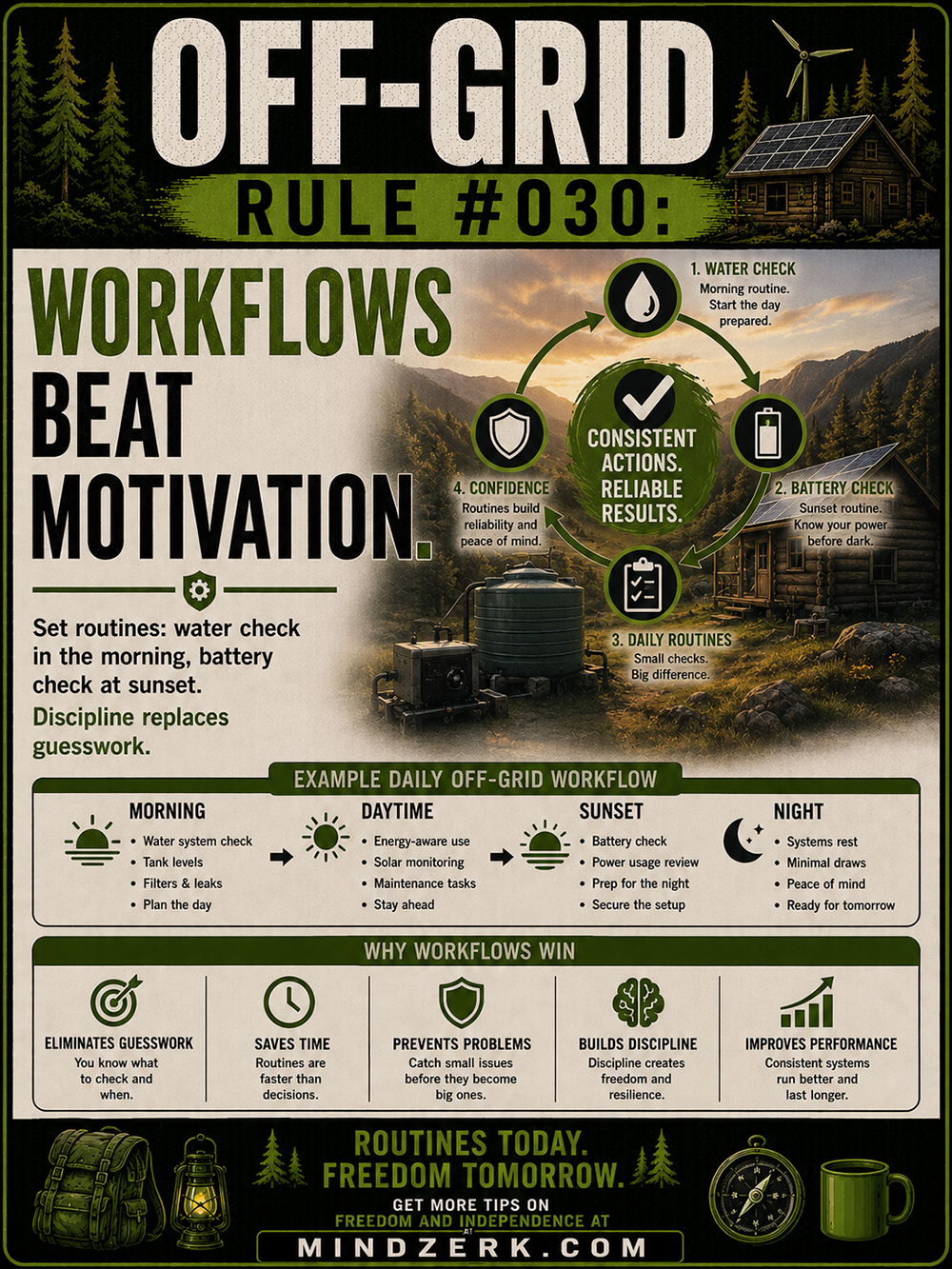
- checking water systems every morning
- reviewing battery levels at sunset
- monitoring fuel usage
- listening for unusual sounds
- inspecting equipment regularly
…prevent small problems from becoming expensive disasters.
Discipline creates reliability.
Motivation Is Unreliable
Some days you’ll feel energized.
Other days:
- it’s cold
- you’re tired
- the weather sucks
- equipment problems pile up
- you don’t feel like checking anything
That’s normal.
If your system depends on motivation, it eventually fails.
Workflows solve this problem because routines remove emotional decision-making.
You stop asking:
“Do I feel like doing this?”
And start operating automatically.
Consistent Actions Create Reliable Results
Most off-grid failures are not dramatic.
They come from neglected small things.
Tiny overlooked problems become:
- dead batteries
- frozen pipes
- drained tanks
- fuel shortages
- damaged systems
- preventable breakdowns
Routine catches problems early.
That is the hidden power of workflows.
The Morning Check Matters
Morning is when you establish awareness for the day.
A strong morning workflow might include:
- water system inspection
- tank level checks
- leak inspection
- weather review
- battery status check
- inverter status confirmation
- fuel awareness
These checks only take minutes.
But they massively reduce uncertainty.
Instead of reacting blindly later, you already know the condition of your setup.
Daytime Is Maintenance Time
During daylight:
- solar systems are active
- visibility is better
- repairs are easier
- energy production is strongest
That makes daytime ideal for:
- maintenance
- inspections
- cleaning filters
- organizing supplies
- checking charging systems
- monitoring energy usage
Workflows create rhythm.
And rhythm creates stability.
Sunset Changes Everything
Off-grid life changes at sunset.
Power becomes more valuable.
Visibility drops.
Temperatures shift.
Mistakes become harder to solve.
That’s why evening routines matter so much.
A sunset workflow might include:
- checking battery levels
- reviewing overnight power needs
- preparing lighting
- securing tools
- reducing unnecessary loads
- planning for weather changes
You want awareness before darkness arrives.
Not after.
Night Should Be Quiet
A healthy off-grid system should rest at night.
That means:
- fewer power draws
- minimal unnecessary usage
- systems stabilized
- tools put away
- tomorrow prepared for
Peace of mind comes from preparation.
Not hope.
Why Workflows Win
Workflows outperform motivation for several reasons.
They Eliminate Guesswork
You already know:
- what to check
- when to check
- what normal looks like
That removes stress and uncertainty.
They Save Time
Routines are faster than constantly deciding what to do next.
Mental energy matters.
Workflows preserve it.
They Prevent Problems
Most major failures begin as small unnoticed issues.
Routine inspection catches them early.
That saves:
- money
- time
- equipment
- frustration
They Build Discipline
Discipline is one of the most valuable off-grid skills.
Not because it sounds tough.
Because consistent discipline creates:
- resilience
- preparedness
- reliability
- independence
They Improve System Performance
Well-maintained systems:
- last longer
- perform better
- fail less often
- waste fewer resources
Routine maintenance is cheaper than emergency repair.
Every time.
Off-Grid Living Is Really About Awareness
The deeper truth:
off-grid living is less about equipment and more about awareness.
You become more connected to:
- water
- power
- fuel
- weather
- temperature
- maintenance
- timing
That awareness creates independence.
Because you stop assuming systems magically take care of themselves.
Simplicity Makes Workflows Easier
Complicated systems create fragile routines.
Simple systems:
- are easier to inspect
- easier to repair
- easier to monitor
- easier to remember
That’s why simplicity matters so much off-grid.
A workflow only works long-term if it’s realistic enough to maintain consistently.
Build Routines Before Emergencies
The worst time to invent workflows is during a problem.
Routines should already exist before:
- storms
- outages
- cold snaps
- fuel shortages
- equipment failures
That way your response becomes automatic instead of chaotic.
Preparedness is built through repetition.
Small Habits Compound
Most off-grid stability comes from boring repetitive habits.
Not heroic survival moments.
Things like:
- checking water daily
- rotating supplies
- reviewing battery status
- monitoring sounds
- inspecting connections
- cleaning equipment
These tiny routines compound into long-term reliability.
Freedom Requires Responsibility
A lot of people want off-grid freedom.
Fewer people want off-grid responsibility.
But the two are connected.
The more independent your systems become,
the more important your discipline becomes.
Because there is no landlord.
No maintenance department.
No utility company solving problems for you.
You become the operator.
The Goal Is Calm, Not Chaos
Good workflows create calm.
You stop constantly reacting to problems because:
- you monitor proactively
- you catch issues early
- you know your systems
- you understand your rhythms
That creates confidence.
And confidence is one of the biggest hidden luxuries of preparedness.
Final Thought
Motivation is temporary.
Workflows endure.
That’s true in business.
In health.
In creativity.
And especially in off-grid living.
The setups that survive long-term are usually not run by the most motivated people.
They’re run by people with reliable routines.
People who:
- check systems consistently
- maintain awareness
- build habits
- follow workflows
- reduce guesswork
Because off-grid resilience is rarely built through intensity.
It’s built through repetition.
Small checks.
Daily awareness.
Reliable routines.
That’s what creates real independence.
Routines today.
Freedom tomorrow.