
Most people think about privacy in terms of passwords, encryption, or social media settings.
Meanwhile, the single most powerful surveillance device in their life sits in their pocket all day long.
Their phone.
It travels with them.
Sleeps beside them.
Knows where they go.
Knows who they talk to.
Knows what they buy.
Knows what they search for.
Knows what interests them.
And in many cases, it reports that information continuously.
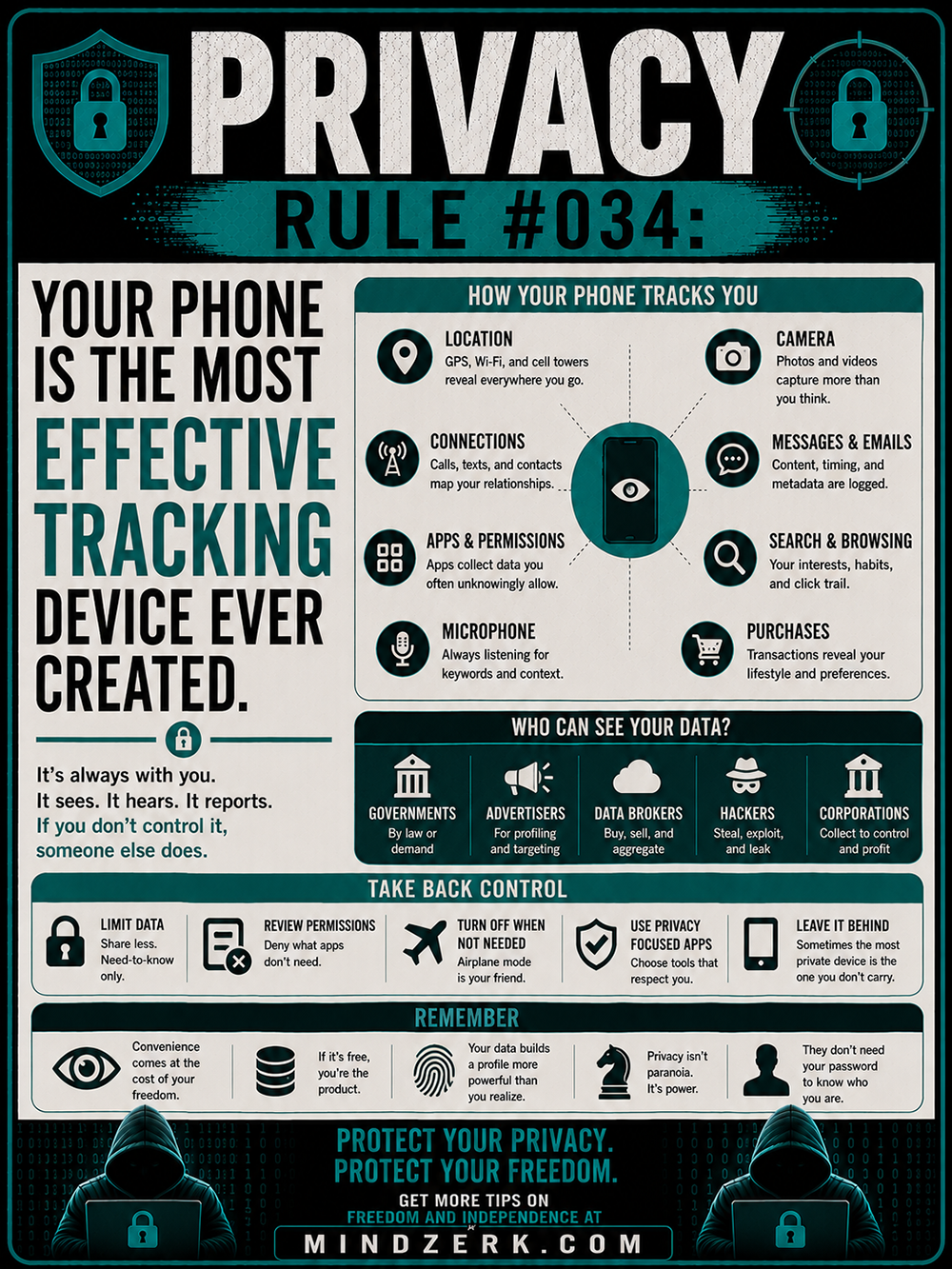
Privacy Rule #034: Your Phone Is the Most Effective Tracking Device Ever Created.
That isn’t paranoia.
It’s simply the reality of how modern mobile technology works.
Your Phone Knows Where You Are
The most obvious form of tracking is location.
Your device constantly interacts with:
- GPS satellites
- Cell towers
- Wi-Fi networks
- Bluetooth devices
Even when GPS is disabled, location can often be estimated through nearby wireless networks and cell tower triangulation.
Over time, this creates an incredibly detailed map of your life.
It can reveal:
- Where you live
- Where you work
- Where you shop
- Who you visit
- Your routines
- Your habits
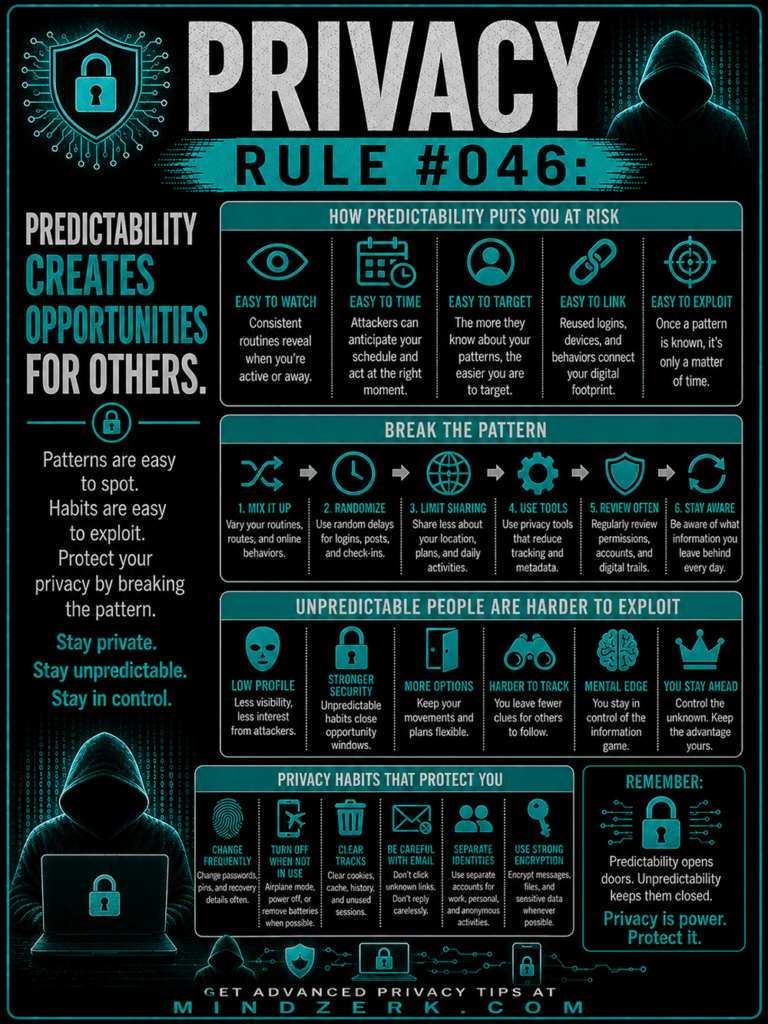
Patterns become predictable.
And predictable people are easier to profile.
Your Relationships Are Mapped
Most people think of surveillance as watching content.
Often, the metadata is more valuable.
Your phone records connections.
Calls.
Texts.
Contacts.
Messaging activity.
Communication frequency.
Even when message content is encrypted, relationship patterns often remain visible.
This creates a network map.
Who talks to whom.
How often.
At what times.
For analysts, advertisers, and data brokers, those patterns are extremely valuable.
Apps Collect More Than You Think
Every app wants permissions.
Camera access.
Microphone access.
Location access.
Contacts.
Files.
Photos.
Notifications.
Many apps request far more information than they actually need.
Some collect data for functionality.
Others collect data because data is profitable.
The result is that dozens of companies may be gathering information about you simultaneously.
Often without you realizing the extent of it.
Your Searches Reveal Your Mind
Search history is one of the most revealing forms of data.
It exposes:
- Interests
- Fears
- Health concerns
- Financial concerns
- Political interests
- Future plans
People often tell search engines things they would never tell another human being.
Those searches create profiles.
Those profiles become products.
And those products are sold.
Purchases Tell a Story
Every transaction creates data.
What you buy.
When you buy.
How often you buy.
Where you buy.
Combined together, purchase histories reveal lifestyle patterns with remarkable accuracy.
Your spending habits often reveal more than your social media posts ever could.
The Convenience Trade-Off
The reason phones became so successful is simple.
They’re incredibly useful.
Navigation.
Communication.
Banking.
Photography.
Entertainment.
Research.
Business.
The convenience is undeniable.
But convenience often comes with a hidden cost.
Data collection.
The more convenience a service provides, the more information it often gathers.
Privacy is frequently traded for ease of use.
Most people simply never notice the exchange happening.
Who Can See Your Data?
The answer is usually more people than you think.
Potential viewers include:
- Advertisers
- Data brokers
- App developers
- Analytics providers
- Corporations
- Government agencies
- Criminal actors after a breach
Not everyone has access to everything.
But every additional copy of your information creates another point of exposure.
The safest data is data that was never collected in the first place.
Taking Back Control
You don’t have to throw your phone into a lake.
You don’t have to move into a cave.
But you can reduce unnecessary exposure.
Start with simple steps:
Review Permissions
Check every application.
Ask:
- Does this app need my location?
- Does it need microphone access?
- Does it need my contacts?
Remove anything unnecessary.
Share Less
Not every service needs your real information.
Not every profile requires complete details.
Limit what you provide.
Use Privacy-Focused Alternatives
Some companies build products around collecting data.
Others build products around protecting users.
Choose carefully.
Use Airplane Mode
When you don’t need connectivity, turn it off.
A disconnected device reveals less.
Audit Your Apps
Delete applications you no longer use.
Old apps often become forgotten security risks.
Privacy Isn’t Paranoia
One of the biggest misconceptions about privacy is that only paranoid people care about it.
Privacy isn’t paranoia.
Privacy is control.
You lock your house.
You close your curtains.
You protect your bank account.
Privacy is no different.
It isn’t about hiding wrongdoing.
It’s about deciding who gets access to your life.
The Bottom Line
Your phone is one of the most powerful tools ever created.
It’s also one of the most effective tracking devices ever created.
It knows where you are.
Who you know.
What you buy.
What you search.
What you believe.
What you fear.
The question isn’t whether your phone collects data.
The question is how much of that data you’re willing to give away.
Use your phone.
Enjoy its benefits.
But understand the trade-offs.
Because if you don’t control your data, someone else will.
Protect your privacy. Protect your freedom.