

Why So Many “Entrepreneurs” Never Move
There has never been a time when more people called themselves entrepreneurs—and fewer actually moved.
Scroll any platform and you’ll see it. Bios filled with titles. Screenshots of dashboards. Quotes about freedom, hustle, and building “the thing.” But scratch the surface and most of it collapses into planning, prepping, researching, and waiting. Weeks turn into months. Months into years. The bank balance stays the same.
This isn’t a motivation problem. It’s not a talent gap. And it’s definitely not a lack of information.
It’s a story problem.
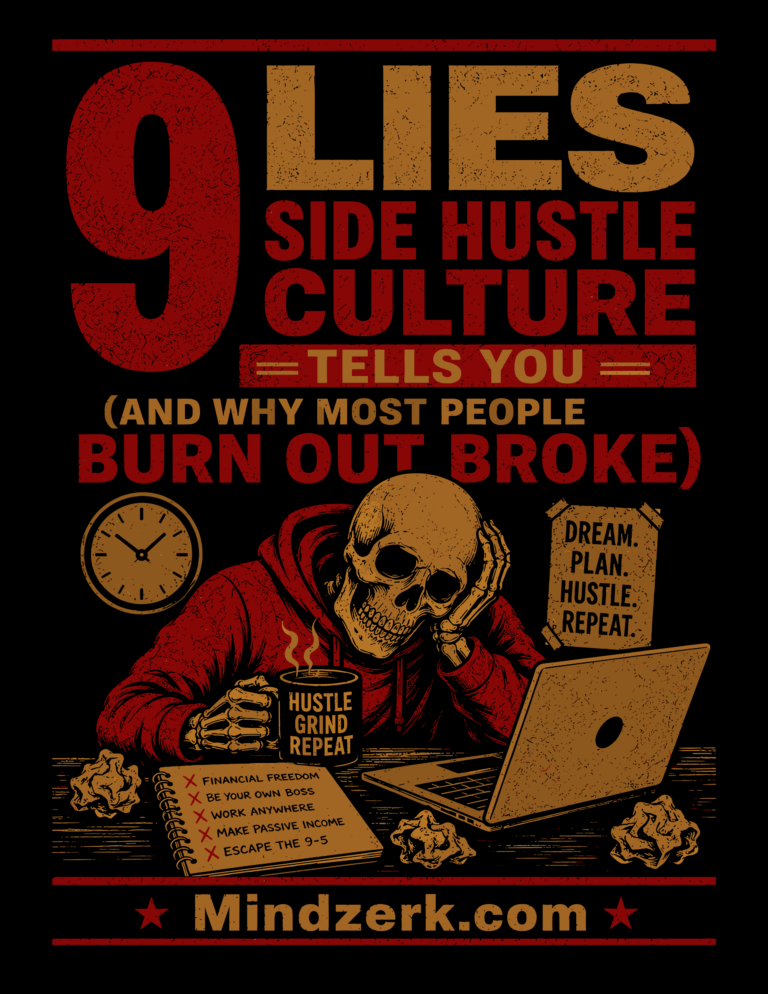
Modern entrepreneurship has been rebranded as an identity instead of a practice. You don’t do entrepreneurship anymore—you become an entrepreneur. You collect the right language, the right tools, the right aspirations. You feel like you’re making progress because everything around you looks like work. But none of it produces movement.
The internet rewards this illusion. Courses sell certainty. Influencers sell confidence. Platforms sell the fantasy that there’s a correct sequence you must follow before you’re allowed to start. So people wait. They polish. They prepare. They optimize themselves right into paralysis.
Meanwhile, real businesses are built quietly, awkwardly, and without permission. They start small. They look unimpressive. They move before they feel ready. And most importantly—they create friction with reality instead of avoiding it.
The gap between people who escape zero and those who stay stuck isn’t intelligence or effort. It’s the lies they accept as truth. The following six are the most common—and the most effective at keeping people exactly where they are.
Lie #1: You Need a Big Idea
Most people don’t fail because they pick the wrong idea.
They fail because they never pick any idea.
They’re waiting for something big. Something original. Something that feels worthy of the risk. They tell themselves they’re being thoughtful or strategic, but what they’re really doing is postponing exposure. A “big idea” feels safer because it doesn’t exist yet. You can’t be rejected for something you haven’t released.
The internet makes this worse. We’re surrounded by origin stories that start at the finish line. Unicorn companies. Overnight successes. Perfect brand narratives that erase the ugly first drafts. What you don’t see are the boring, derivative beginnings that actually made those businesses possible.
Here’s the uncomfortable truth: big ideas are usually a liability at the start.
They demand explanations. They require belief. They ask strangers to understand something before they’ve seen any proof that it works. That’s a hard sell when you have no reputation, no audience, and no momentum.
Small ideas don’t have that problem.
A small idea solves one narrow problem for one specific group. It doesn’t try to be impressive. It tries to be useful. It can be tested quickly, improved cheaply, and abandoned without emotional damage. That speed is the real advantage—not originality.
Waiting for a big idea is often just fear dressed up as ambition. Fear of being boring. Fear of being copied. Fear of discovering that your idea wasn’t special after all. But boring ideas get executed. Special ideas get protected, overthought, and never launched.
The people who escape zero don’t start with vision. They start with friction. Something annoying. Something inefficient. Something that already exists but works badly. They improve it a little, sell it sooner than feels comfortable, and let reality shape the next move.
You don’t need a big idea.
You need a small one that you’re willing to act on before it feels impressive.
Lie #2: You Need to Be Passionate
Passion is one of the most overused—and least useful—words in entrepreneurship.
It sounds noble. Inspiring. Like a prerequisite for success. In reality, it’s often a trap that keeps people waiting for a feeling that never shows up. Or worse, convinces them they’re broken when it doesn’t.
Most people aren’t stuck because they lack passion. They’re stuck because they’ve been told they shouldn’t start until they feel a certain way.
Passion is unstable. It spikes, fades, disappears, and comes back when it feels like it. Building anything that lasts requires showing up on days when nothing feels exciting. On days when the work is repetitive, unclear, or mildly annoying. Passion doesn’t survive those days. Tolerance does.
The early stages of entrepreneurship are rarely inspiring. They’re awkward. You’re guessing. You’re unsure if anyone cares. You’re doing small tasks that don’t look impressive and don’t deliver instant feedback. If passion were required, almost no real business would ever exist.
What actually carries people forward is a low-glamour trait no one markets: the ability to keep going without emotional reward.
That might sound bleak, but it’s freeing. It means you don’t need to love the work. You just need to not hate it enough to quit. You need something you can tolerate doing repeatedly while you learn what works.
Here’s the part no one likes to admit: passion usually arrives after progress. After the first sale. After someone thanks you. After you realize this thing might actually work. Momentum creates emotion, not the other way around.
Waiting to feel passionate before starting is backwards. It keeps you scanning yourself instead of engaging with the world. It turns entrepreneurship into a personality test instead of a set of actions.
You don’t need passion.
You need enough interest to begin—and enough discipline to continue when the feeling wears off.
Lie #3: You Should Build Before You Sell
This lie sounds responsible. Professional. Safe.
Finish the product. Perfect the offer. Get everything ready first. Then—when it’s done—you can finally sell.
In practice, this is how people spend months building something no one wants.
Building before selling feels productive because it keeps you busy without requiring rejection. You can tweak. Improve. Add features. Tell yourself you’re being thorough. But all of that work happens in a vacuum, where assumptions go unchallenged and doubts stay theoretical.
Selling early forces reality into the room.
It answers the only question that matters: will someone exchange money for this? Not likes. Not encouragement. Not “that’s cool.” Actual commitment. Without that signal, building is just guessing with extra steps.
The fear is obvious. What if it’s not ready? What if people judge it? What if it fails?
Here’s the truth: if no one will buy the rough version, the polished one won’t save it. Clean design and extra features don’t fix a lack of demand. They just delay discovering it.
Most first versions should feel slightly embarrassing. That’s how you know you didn’t overbuild. Early buyers aren’t paying for perfection—they’re paying for progress, access, and the promise that you’ll improve it with them.
Selling early also protects you. It limits wasted time. It exposes bad ideas quickly. It gives you feedback you can’t invent in isolation. And if it flops, you learn fast and move on instead of dragging a dead project across months of effort.
The people stuck at zero build castles with no doors. The ones who move open the door first, then decide what’s worth building inside.
You don’t sell after you build.
You build because you sold.
Lie #4: You Need the Right Tools, Stack, or Platform
This lie keeps people busy forever and broke comfortably.
It starts with a simple thought: I’ll begin once I have the right setup. The right website. The right software. The right platform. The right stack that serious people use. So you research. You compare. You subscribe. You tweak settings. You redesign logos. You migrate systems that never had users to begin with.
It feels like progress because it looks technical. It feels justified because tools are tangible. But none of it creates momentum.
Tools don’t create businesses. They decorate them.
Most early-stage failures don’t come from bad technology. They come from the absence of customers. Yet people will rebuild their stack three times before making a single offer. It’s a form of avoidance that wears a productivity mask.
The uncomfortable reality is this: constraints are an advantage.
Limited tools force clarity. A simple setup makes weaknesses obvious. You can’t hide behind features or automation when the offer itself is unclear. That discomfort pushes better decisions faster than any software upgrade ever will.
Every platform promises leverage. Every tool claims to save time. But leverage only matters after something works. Before that, it’s just noise layered on top of uncertainty.
Some of the most functional early businesses run on email, a payment link, and a plain page. No funnel wizardry. No complex integrations. Just a clear problem, a clear offer, and a way to say yes.
The people stuck at zero believe the system will make them ready. The people who move accept that readiness comes from contact with reality, not configuration screens.
You don’t need a better stack.
You need something simple enough that failure can’t hide—and success can’t be delayed.
Lie #5: More Hustle Equals More Progress
Hustle culture teaches people to confuse motion with movement.
If you’re exhausted, you must be doing something right. If you’re busy from morning to night, progress must be happening. If you slow down, you’re falling behind. That’s the story. And it’s incredibly effective at keeping people stuck while feeling virtuous about it.
The problem is that effort doesn’t compound—leverage does.
Most hustle is just activity stacked on top of uncertainty. More posts. More tweaks. More half-finished ideas. More late nights spent “working” without a clear connection to money, feedback, or improvement. It feels productive because it’s constant, but it doesn’t move the needle.
Burnout isn’t a badge of honor. It’s a signal that energy is being spent without return.
People who escape zero aren’t grinding harder. They’re shortening the distance between action and outcome. They focus on the few moves that produce information or income and cut everything else without guilt.
Hustle culture also hides a quieter fear: if you stop being busy, you might have to face whether what you’re doing actually works. Staying exhausted becomes a way to avoid that question.
Working nonstop makes failure feel noble. Working deliberately makes failure visible.
The irony is that real progress often looks calm. Focused. Almost boring. One offer refined. One channel tested. One loop repeated until it produces something measurable. That’s not flashy, so it doesn’t get celebrated—but it works.
More hustle doesn’t equal more progress.
Clear effort applied to the right friction does.
Lie #6: Once You Start, You’re Supposed to Feel Confident
Confidence is one of the most misleading expectations people carry into entrepreneurship.
They assume that once they commit—once they really start—the doubt will disappear. The fog will lift. Decisions will feel clearer. And if that doesn’t happen, they take it as a sign they’re doing something wrong.
So they hesitate. They wait for certainty. They interpret discomfort as danger instead of information.
Here’s the reality: confidence rarely shows up on time.
Most early action happens under uncertainty. You’re guessing. You don’t know if the offer is right, if the price makes sense, or if anyone will care. That feeling doesn’t vanish after you start—it just becomes familiar. The people who move aren’t more confident. They’re more tolerant of not knowing.
The myth of confidence keeps people stuck because it turns hesitation into a stop sign. If you believe you’re supposed to feel sure, then doubt becomes proof you’re not ready. In truth, doubt is the default state of doing anything that matters.
Confidence is built through exposure, not thinking. It forms after you’ve sent the email, made the offer, had the awkward conversation, and survived the outcome. It’s retrospective. You recognize it only after you’ve already acted without it.
Waiting for confidence before moving is like waiting for balance before learning to walk. You develop it by wobbling, not by standing still.
The people who escape zero don’t feel ready. They feel uncertain and move anyway. Over time, that uncertainty stops being scary—not because it goes away, but because they’ve learned it won’t kill them.
You’re not supposed to feel confident when you start.
You’re supposed to start so confidence has something to attach to.
The Real Reason People Stay at Zero
People don’t stay at zero because they lack intelligence, creativity, or access to information. They stay at zero because they adopt stories that make inaction feel responsible.
Each of these lies offers psychological cover. Wait for a big idea. Wait for passion. Build in private. Get the right tools. Work harder. Feel confident first. None of them sound like excuses. They sound like wisdom. That’s why they’re so effective.
Together, they create a perfect loop: constant preparation with no exposure to reality. Plenty of effort, no feedback. Motion without risk. And without risk, nothing changes.
What actually moves people forward is far less dramatic. Small actions taken before they feel impressive. Offers made before certainty arrives. Simple systems that force contact with real outcomes—money, rejection, adjustment, repeat.
Entrepreneurship isn’t a transformation into a new identity. It’s not about becoming fearless, inspired, or optimized. It’s about doing uncomfortable, ordinary things consistently enough that reality starts responding.
The fastest way out of zero isn’t learning one more framework or waiting for the right moment. It’s removing the lies that justify staying where you are.
Once those stories lose their grip, movement becomes unavoidable.
Tiny Brand Big Bang — Start Small. Move Fast. Escape Zero.
If this info hit a nerve, that’s a good sign.
Tiny Brand Big Bang is built for people who are done with theory and ready for traction. No “find your passion” nonsense. No overbuilt funnels. No waiting for permission.
Inside, you’ll find small, boring, workable business ideas designed to be launched fast—using simple tools, low pressure, and real-world feedback. Each idea is structured to break the exact lies that keep people stuck at zero:
- Start with something sellable, not a vision
- Launch before you feel ready
- Use what you already have
- Focus on momentum, not scale
This isn’t about building a brand empire.
It’s about proving to yourself that movement is possible—and repeating that proof until zero is behind you.
If you’re tired of planning and ready to ship something real, Tiny Brand Big Bang is your on-ramp.
Start small. Launch ugly. Let reality do the rest.