
Freedom is one of those words everyone uses and almost no one defines.
Politicians promise it. Advertisers borrow it. Corporations wrap it around products that require monthly payments and permission slips.
Most people assume freedom is something you either have or don’t.
That’s the first mistake.
Freedom isn’t a condition.
It’s a skill set.
And modern society works very hard to make sure you never learn it.
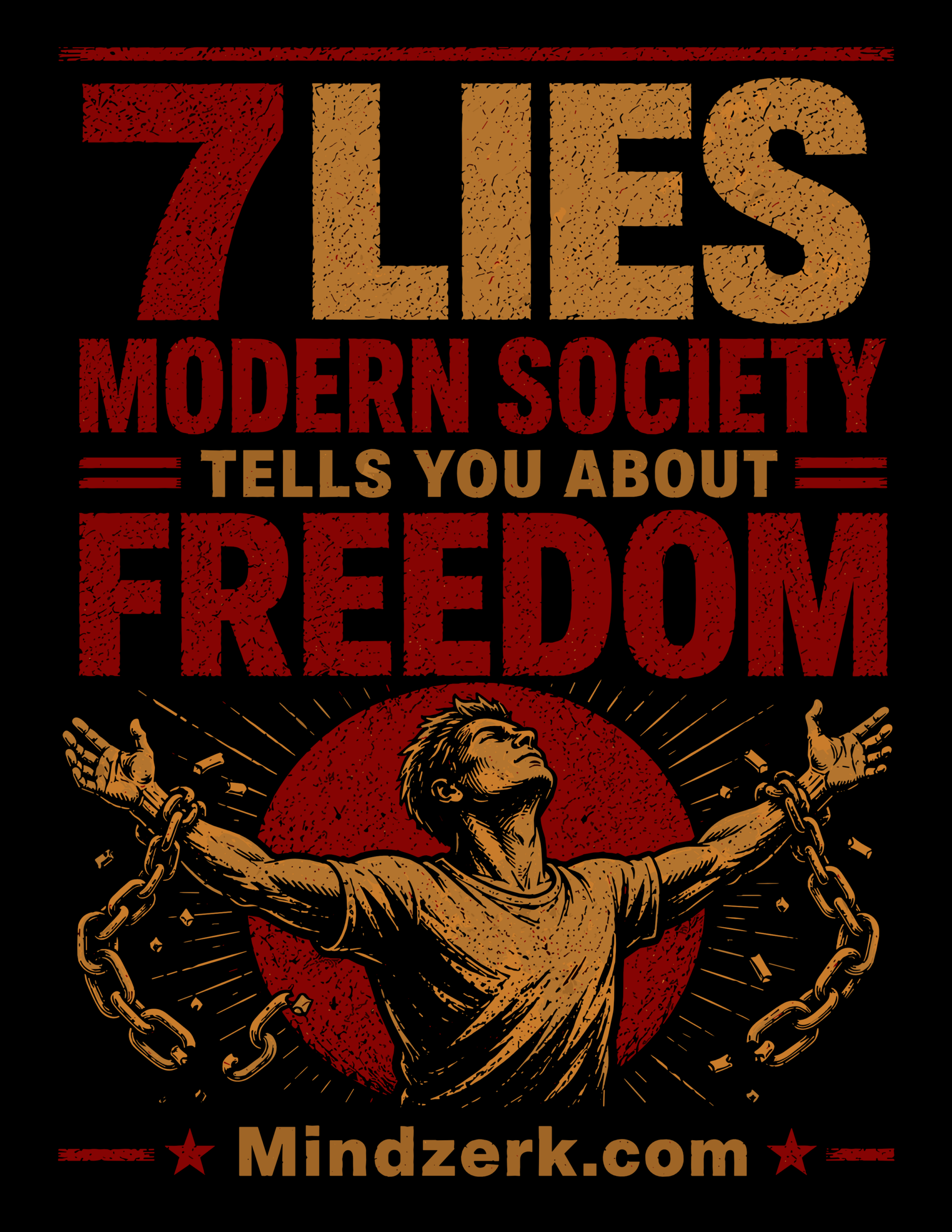
Below are seven lies so common they no longer sound like lies — even though they quietly shape every decision you make.
1. Freedom Means Comfort
You’re told that freedom looks like convenience.
Climate control.
Instant delivery.
One-click solutions.
But comfort is not freedom. Comfort is dependency with better marketing.
Every convenience removes a capability.
Every shortcut weakens a muscle.
When your heat, food, water, transportation, communication, and income all come from external systems you don’t control, your comfort exists only as long as those systems allow it.
That’s not freedom.
That’s conditional permission.
2. Owning Things Makes You Secure
Modern ownership is mostly symbolic.
You “own” a house — as long as taxes are paid.
You “own” a car — as long as registration is current.
You “own” money — as long as accounts remain accessible.
Most assets today exist inside layers of revocable agreements.
True ownership used to mean control.
Now it means compliance.
If something can be frozen, seized, revoked, or invalidated remotely, it isn’t security. It’s temporary access.
Freedom doesn’t come from possession.
It comes from independence of function.
3. The System Will Warn You Before Things Get Bad
People imagine collapse as an event.
A headline.
A siren.
A moment when everyone realizes something has changed.
That’s not how systems fail.
They tighten.
Rules multiply quietly.
Requirements expand slowly.
Exceptions disappear one by one.
Nothing feels urgent — until everything does.
By the time people recognize restriction, the exits are already regulated, monitored, or closed.
Freedom doesn’t vanish in explosions.
It fades in paperwork.
4. You Can Always “Just Leave” Later
This is one of the most dangerous assumptions.
People believe mobility equals freedom. That they can move whenever they choose.
But movement depends on:
- legal permission
- financial liquidity
- available land
- regulatory tolerance
All of which can change without notice.
The ability to relocate isn’t guaranteed.
It’s a window.
And windows close slowly enough that most people don’t notice — until they’re sealed.
Freedom delayed is usually freedom denied.
5. Nature Is Dangerous — Civilization Is Safe
This lie is subtle.
Nature is framed as hostile.
Civilization as protective.
But civilization doesn’t remove danger.
It abstracts it.
In nature, threats are immediate and visible. Cold. Hunger. Injury. Weather.
In civilization, threats are administrative. Financial. Bureaucratic. Invisible.
A broken leg in the woods is dangerous.
A frozen account in the city can be fatal — just slower.
Safety isn’t about location.
It’s about what you can handle when systems stop responding.
6. If Real Freedom Existed, Everyone Would Be Doing It
This assumption sounds logical.
It’s also wrong.
Most people do not seek freedom. They seek predictability.
They want routine. Stability. Approval.
Freedom requires responsibility — and responsibility is heavy.
That’s why real autonomy has always been practiced by minorities, outsiders, and people willing to live with uncertainty.
If everyone wanted it, it wouldn’t be rare.
It’s rare because most people don’t want the cost.
7. Freedom Is a Right, Not a Skill
This is the most dangerous lie of all.
Rights exist on paper.
Skills exist in reality.
A person who cannot generate heat, food, water, shelter, or legal standing independently is not free — regardless of what documents say.
Freedom isn’t granted.
It’s maintained.
And anything that must be maintained can be lost.
Often quietly.
Often politely.
Often legally.
The Quiet Truth
Modern society doesn’t hate freedom.
It just redefines it until it’s harmless.
You’re told freedom means choosing between brands, careers, opinions, or lifestyles — while never questioning the structure beneath them.
Real freedom isn’t loud.
It’s operational.
It lives in what you can do without permission.
Once you see that, the question stops being whether freedom matters.
And becomes:
Where does it still exist — and what does it actually take to hold it?
That question is uncomfortable.
Which is why most people never ask it.
Most people sense this instinctively.
They feel the pressure, the dependency, the narrowing options — but they don’t know how to translate that feeling into action. Not dramatic action. Not reckless action. Deliberate action.
Understanding freedom philosophically is easy.
Understanding it operationally is rare.
What comes next isn’t about rebellion or escape fantasies. It’s about orientation — learning where autonomy still exists, how it’s quietly maintained, and what it realistically demands.
That is the purpose of Operation Last Frontier.
Not to tell you what to do —
but to show you how freedom actually works once you step outside the stories.