
Free feels like a win.
Free apps.
Free platforms.
Free tools.
No cost. No risk.
At least, that’s how it looks on the surface.
The Reality Behind “Free”
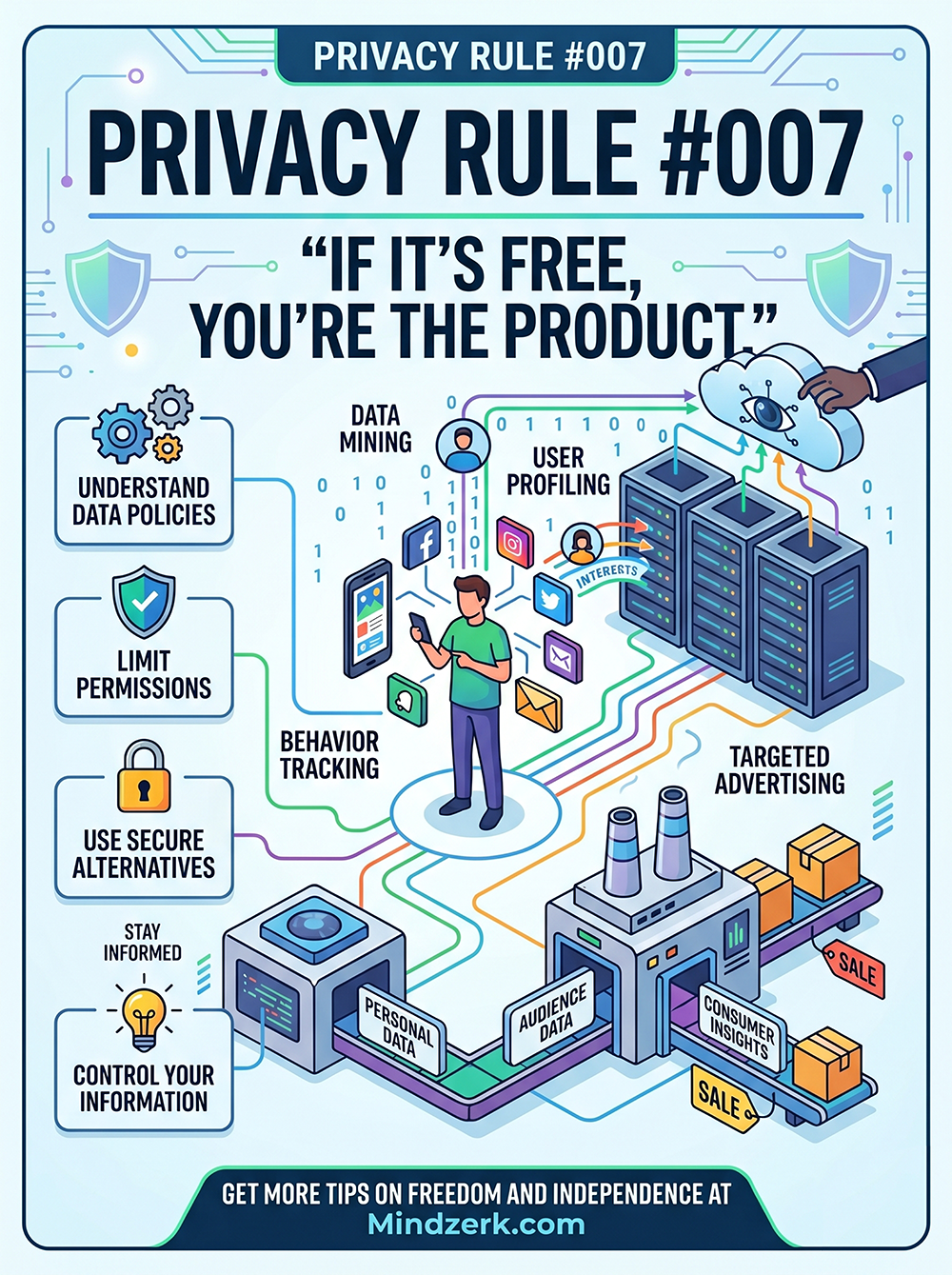
If you’re not paying for the product… you are the product.
These platforms don’t run on goodwill.
They run on data.
Your data.
What They’re Actually Collecting
Every time you use a “free” service, you’re feeding a system.
That system tracks:
- What you click
- What you search
- How long you stay
- What you like
- Who you interact with
All of it builds a profile.
A detailed one.
What Happens to That Data
It doesn’t just sit there.
It gets:
- Processed
- Packaged
- Sold or leveraged
Into things like:
- Targeted advertising
- Behavioral predictions
- Audience segmentation
- Consumer insights
You’re not just using the platform.
You’re fueling it.
The Rule: Treat Free Services as Data Trades
Every “free” tool is a transaction—you’re paying with information.
Once you see it that way…
You start making better decisions.
How to Protect Yourself Without Going Extreme
You don’t need to quit everything.
You just need awareness and control.
1. Understand What You’re Using
Before signing up:
- Read the basics of their data policy
- Know what they collect
Not everything—but enough to be aware.
2. Limit Permissions
Most apps ask for more than they need.
- Location
- Contacts
- Microphone
- Camera
Turn off what isn’t required.
3. Use Alternatives When It Matters
For sensitive activity:
- Choose paid tools
- Use privacy-focused services
You’re buying control instead of giving it away.
4. Separate Your Activity
Don’t run everything through one identity.
Keep:
- Personal use
- Business use
- Experimental use
Separate.
The Hidden Advantage: Control Over Your Data
When you stop blindly accepting “free”:
- You reduce tracking
- You limit exposure
- You make intentional trade-offs
You’re not just consuming tools.
You’re managing your footprint.
Where People Go Wrong
They assume:
“It’s free, so it’s harmless.”
But that thinking leads to:
- Overexposure
- Data accumulation
- Loss of control over time
The Bottom Line
Free isn’t free.
It’s just paid differently.
You’re either the customer—or the product being sold.
Apply This Everywhere
This idea applies beyond apps.
Think:
- Platforms
- Services
- Content ecosystems
If there’s no clear revenue model…
You are the model.
Final Thought
You don’t need to avoid free tools.
You just need to understand the cost.
**Once you see the trade, you can decide if it’s worth it.